


Got an editor yet?
You need one. You know this already.
You’ve heard hundreds of people shouting from the tops of buildings (or Facebook Groups) that you need a real person (not named you) to edit your books. AI is cool and all (sometimes), but it’s no substitute for the trained human eye and mind. (Don’t believe me? Ask ChatGPT to list thirty things wrong with your book, watch them compliment you, and then proceed to list a bunch of things that don’t exist in your manuscript at all.)
But not all human editors are the right fit for your manuscript.
Some undercharge and underperform.
Some overcharge and underperform.
Some aren’t readers of your genre.
Some are better at copy editing or developmental editing.
That’s why it’s important to get to know them first. A sample edit is a must, but so is an interview. Ask them what they usually work on. If they can share a published book they’ve edited. (Maybe even read it.) What they read in their free time.
Lucky for me (and now you), I met an awesome one at AWP last month.
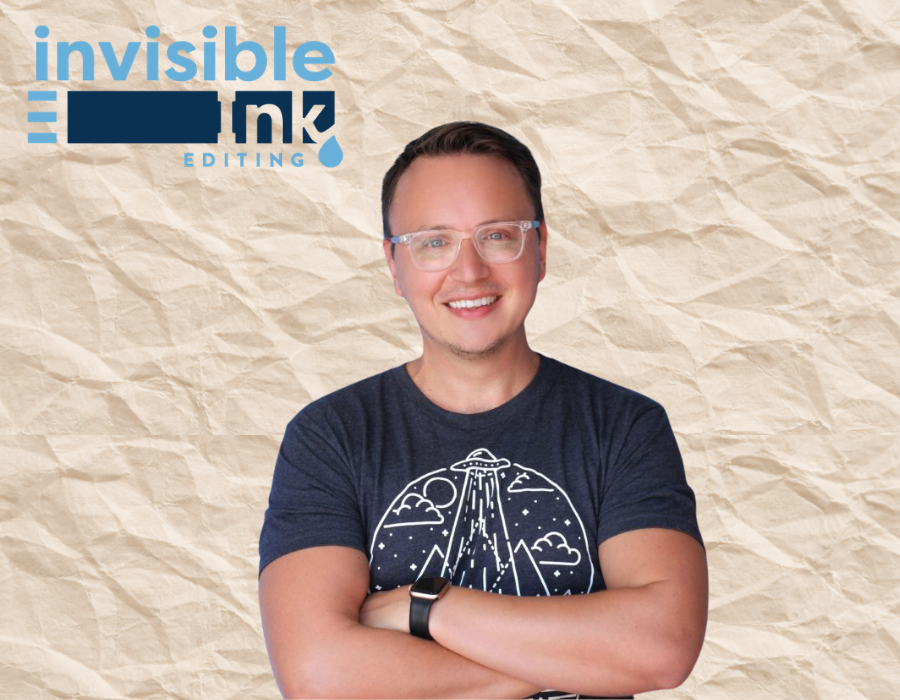
Liam Carnahan is the founder of Invisible Ink Editing. He gave me candy, I gave him a donut, and we had a great conversation about the different ways we like working in publishing.
So instead of having you ask the tough (and not so tough) questions, I interviewed him for our Write Indie newsletter. If you’re in the market for a new editor or will be soon, here’s my interview with him. Even if you’re not in the market yet, this is a cool little back and forth that writers could benefit from if they’re feeling stuck in the self-editing trenches.

How and when did Invisible Ink get started and how has it evolved over time?
I founded Invisible Ink Editing in 2012. That was the year I got my first Kindle and started reading a lot of excellent self-published books that clearly hadn’t gone through the editing process. I realized there was a growing number of talented independent authors who didn’t have access to the professional editors you might be paired up with if you go with traditional publishing. So I started offering editing services specifically to indie authors, and we grew from there!
Over time, we’ve expanded our services to go beyond traditional editing, to include things like manuscript evaluation and book coaching, which happen earlier in the writing process. These services are to help people who only have partial manuscripts, or who are seeking a long-term, interactive relationship with their editor, instead of the standard “hand-over-your-full-manuscript” style of editing.
Other than that, not much has changed! We’ve maintained our goal of helping indie authors publish books they’re proud of. We’ve added things like our official DEI statement and our upcoming statement on AI usage (spoiler: we don’t use AI at all in the editing of books). But mostly, we’re just here to offer some dang good editing!
Can you remember any particular moments during your time at Emerson College where you felt you were actually pretty good at this?
What a great question. Yes—I remember the exact moment, actually. Emerson classes were often workshop-based, so I really cut my teeth there learning how to give formal critiques of others’ writing.
I remember once, I was assigned to lead a discussion on a short story by a classmate whose writing needed a lot of development. I was anxious thinking of how to tell this writer about the serious work they would need to do to turn the story into something publishable.
But afterward, the writer approached me and thanked me for how I led the discussion and told me they were really excited to go back to the dorm and work on it. I loved seeing that, how my feedback made an author feel excited and energized to take their work and make it better. I loved the partnership of that. I guess I’ve been chasing that feeling my whole career!
You’re not the only one reading for Invisible Ink. What do you look for in an editor who’s interested in joining your team and how do you determine which editor is right for which job?
We ask everyone who is curious about our services to submit their manuscripts to us for a free sample edit. When we get a new submission, it goes to every editor on the team (there are three of us right now). We all read it over, then we have a conversation about who might be the best fit.
We are all interested in different genres and have different experiences and specialties, and we also factor in our schedules and the author’s timeline, so we can deliver what they need. We also sometimes team up—one editor will take care of the developmental editing and line editing, and then you’ll get a fresh set of eyes for the proofreading. All of this happens behind the scenes, in our super-secret editorial office (ok, it’s a Slack channel), and then the editor who is the best fit performs the sample edit and reaches out.
Invisible Ink’s mission is all about preserving author voice and intention. How do you & your team help sustain that author’s vision while still being true to your editorial goals of improving the manuscript?
I love this question. A big part of that is about respecting the author. We see ourselves as partners and collaborators with our clients. We are here to help you get the best possible version of your story out to the people who need to read it. That means listening to your vision, exploring your style, interpreting and tracking the quirks that make your writing yours. Voice is a slippery thing to define, but by deeply reading your manuscript and building a relationship with you, we as editors can help you find it and bring it out on every page.
That’s my touchy-feely answer, but my practical answer is that we pay very close attention to your writing style and keep track of it in what’s called a style sheet. We’ll go over this document with you and ask you any questions we have about stylistic choices you’ve made. We also explain very clearly why we’ve made certain editorial choices, in the style sheet and through comments within the manuscript itself. That’s how we make sure your voice is maintained and elevated, not erased.
You offer book coaching, developmental editing, line editing, and proofreading. Do you have a personal favorite and why?
Personally, I love book coaching. I love working one-on-one with authors, meeting them face to face (IRL or virtually), and seeing them through the challenges and triumphs writers face throughout the drafting process. It’s one of the great joys in my life, helping an author take a brilliant idea and turn it into a brilliant, sellable book. I also love seeing them evolve as writers, right before my eyes. Book coaching means I get to work with the author much more intimately than I do when I’m just reading a manuscript. Don’t get me wrong—I love all forms of editing! But for me, the personal connection between author and editor is sacred and special, and nothing allows me to explore it more deeply than book coaching.
What advice do you give most often?

It is cliché, but I still find myself talking about showing vs. telling more than anything else. Essentially, it’s the age-old writing advice of using description, detail, subtlety, and dialogue to tell your story (showing), rather than exposition and summary (telling).
It is a term that makes a lot of people roll their eyes, because it’s brought up so often—but that’s because it’s by far one of the hardest things to pull off as a writer. I wrote a blog about showing vs. telling a few years ago, and it’s still the number-one post on our site, because so many people get this feedback from writing partners, professors, readers, etc.
And before anyone comes for me, no you don’t always need to show over tell in your writing. There are instances where it makes sense to summarize and “tell,” and certain genres and writing styles require less showing. But for fiction and creative nonfiction writers, even those appropriate instances of telling need to be surrounded by a lot of showing, if you want your readers to feel something and retain your story.
How do you respond to uncomfortable topics or large sections of the book that aren’t working?
It’s delicate work! We always go back to our goal of helping you make a book that will resonate with the right audience. If you have put something in there that may alienate your intended audience, then we will call it out in service of that greater goal.
I have had to have frank conversations with writers about every topic you can imagine—racism, misogyny, all of the phobias, how they treat trauma, specific language they use. We approach it as an open discussion, usually starting with a conversation about whether or not that language is likely to be used by the particular narrator or speaker—if so, we might choose to keep it in. We’ll also talk about how the segment serves the larger plot or message of the manuscript, and find ways to make sure it is moving the plot/message forward instead of holding it back.
When it comes to large sections of the book that aren’t working, this is what developmental editing is for! That is when we can best help you address the more foundational aspects of your manuscript. Most authors need to go through developmental editing at some point, as well as beta reading. When you submit to Invisible Ink editing, we ask you about how much editing your manuscript has had, and factor that into our recommendations for which level of editing you need. If you haven’t had developmental editing and beta reading yet, we’ll most likely recommend starting there.
I know you can’t pick favorites, but…are there any projects you’ve worked on that have stood out to you over the years and why have they stood out?
One of our editors tells me she still occasionally has nightmares about a client’s horror, which she read a decade ago! Now that’s some good horror writing! Series often stick with me, and I’ve read some really good ones as part of this job. I got totally engrossed in a romance series about hunky bodyguards, another about alien-fighting teenagers, and a post-apocalyptic book about a virus that makes everyone think it’s Christmas all the time. What I love about working with indie authors is that I get to read the stories that traditional publishers might reject (their loss!), and help those books find their audiences. And in several cases, I’ve helped authors get their first few books published, and that’s helped them then go on to land agents or book deals.
What are you reading for fun right now and how’s it going?
I’m in a book club with friends, and we are reading Vigil, the latest book by one of my all-time favorite authors, George Saunders. It’s so compelling, I’m trying not to read it all in one sitting because it’s short but delicious.
I also just finished up Chuck Tingle’s Bury Your Gays, which was such a fun read, and also made some really excellent points about the current state of the entertainment industry. It’s one of those books I’m still thinking about, even though I put it down weeks ago! I’m looking forward to seeing Chuck Tingle live in July.
What’s the biggest problem you’re facing in your manuscript right now?
Reply below. We’ll answer, I promise.
About the Interviewer
Joe Walters is the founder of Independent Book Review. After falling in love with reading and writing at Kutztown University, he did the only thing he could think of: quit his teaching job, become a server, and write as much as possible.
When a local job in publishing popped up on a job board, he traded in his PF Chang’s apron for a bookish t-shirt and has been promoting indie press and self-published books ever since. He’s also the author of The Truth About Book Reviews. When he’s not writing or doing editorial or promotion work, he’s playing with his kids or reading indie books by Kindle light.




What did you think?