

A superlative work of first-class mentorship
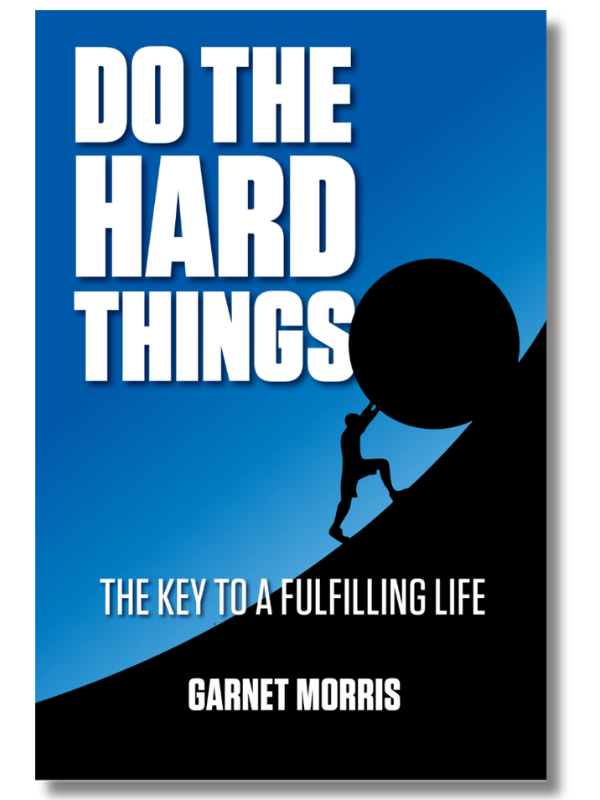
Garnet Morris’s second book, Do the Hard Things, transcends self-help to become something like a mentorship in book form. The distinction is subtle but important. Mentorship requires the author’s lived experience, depth of commitment, and a clear sense of responsibility for the message. In short, it requires palpable commitment from the teacher—a high bar for a book. Mentorship is an act of great generosity when done well, and Do the Hard Things doesit extremely well.
“…comfort can quietly erode us […] challenge can literally rewire us.”
Morris begins with the book’s foundational premise—that human beings require challenge to grow. Comfortable is easy, but it bears a quiet cost. Drawing from the Buddhist philosophy of “no mud, no lotus,” Morris introduces the idea that “growth doesn’t come from ease. It comes from friction.”
However, he is careful to note that blind struggle isn’t the goal. “Choosing to do hard things is not punishment for ourselves […] it’s not about proving something to the world or grinding yourself into exhaustion.” Doing the hard things is about intentional action. The idea is to make daily choices that best serve one’s values and aims.
To that end, Morris emphasizes the importance of choice and conscious reflection, a process guided by the challenges at the end of each chapter. Morris counsels against the hustle-culture value of becoming superhuman through force of will. Instead, his method supports a slow evolution of self. “It’s about becoming the kind of person who can carry more—more responsibility, more opportunity, more resilience, more clarity.”
Morris emphasizes sustainable growth by addressing many aspects of a person’s character, but I found one of the most compelling aspects to be the attention he pays to identity. “Doing hard things changes more than outcomes; it changes self-perception.” Disciplined choices become “evidence, and evidence builds identity.” Repeatedly choosing to take difficult action “reshapes both brain and identity” until you become a person who can handle difficulty with grace.
Morris asserts that all aspects of a person’s life—health, relationships, work and character—are linked. You can’t change one without changing others. Want to quit smoking? You must address routines, stressors and unconsidered habits, a perspective he acquired through personal experience.
Morris shares his experiences sparingly but effectively, but one of his greatest gifts as a mentor is his willingness to draw on the specialized wisdom of others. From Jung’s shadow-self and the science behind Cognitive Behavioral Therapy (CBT) to Andrea Duckworth’s grit and the philosophies of Buddhism, Socrates, and the stoics, Morris offers the reader a wealth of support and food for thought.
I also appreciated Morris’s respect for the specific challenges posed by the modern media landscape and AI. The world has changed a great deal since Garnet Morris began doing the hard things, but he proves his adaptability and the aggregate strength of his method by addressing hustle culture and dopamine distraction with the compassionate application of his principles. These are skills for everyone, not just for entrepreneurs and leaders, although he does offer strong use-cases for those in high-stress / high-visibility fields.
Do the Hard Things moves the reader through the definition of one’s values and the strengthening of body and mind to the taking of accountability in all aspects of one life, including parenting and even aging. Morris concludes by applying his principles to self-mastery and the conscious definition of one’s legacy, mirroring the progression of a life from impulsive newcomer to proactive senior. As Morris illustrates, it is never too soon or too late to do hard things.
Do the Hard Things offers the reader the benefits of superlative mentorship with a skillful and generous teacher. As with all books, the reader’s experience will depend a great deal on the depth of their engagement, but the material offered here is second-to-none as it guides the reader through asking the hard questions, and then using the answers to forge a new path through life.


What did you think?