

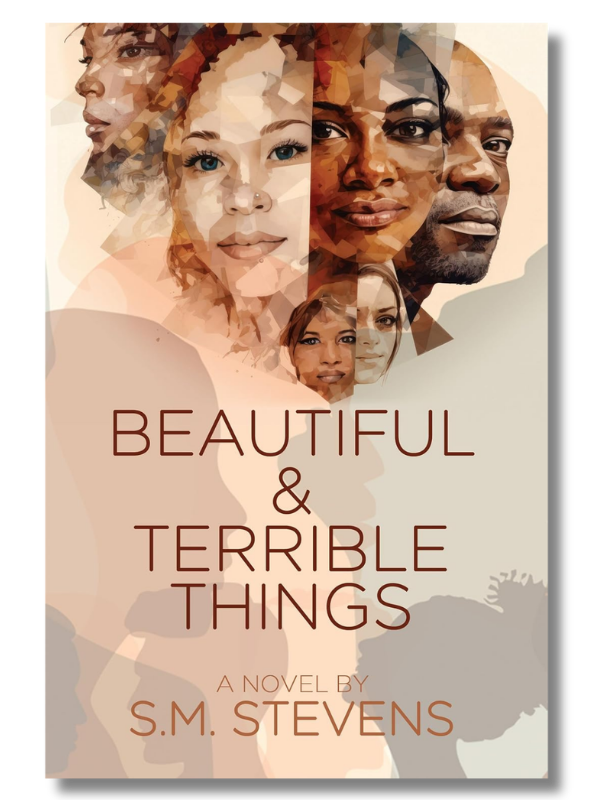
Some friendships heal you, some expose you, and the best ones have the nerve to do both.
Some people join a cause because they want to save the world. Some people join because standing still hurts too much. S.M. Stevens understands the difference, and that distinction gives Beautiful and Terrible Things its emotional grip.
Set in the fictional city of Wrighton, the novel follows Charley Byrne, a twenty-nine-year-old bookstore manager whose life above City Books is less quaint than carefully fortified. Charley isn’t introverted or wounded in some pleasantly bookish way; she is a woman living by ritual because ritual has become the scaffolding around her grief. Her days are counted, ordered, contained—even her cat, Baggage, carries a name that says more than Charley ever volunteers.
Then Xander walks into the store looking for a dog-training book and brings with him the sort of disruptive warmth Charley has spent years avoiding. He is earnest, verbose, funny, maddening, and alive in a way that makes her own self-protection harder to maintain.
That first connection opens the door to a broader ensemble, and this is where Stevens finds the novel’s most marketable strength. Xander’s circle is vivid without feeling manufactured: Terrance, thoughtful and measured, with an awareness of danger that idealism alone cannot erase; Jess, ambitious and morally complicated; Sunny, warm but not simplistic; and Buwan, or Bu, an artist whose humor and vulnerability add a sharper emotional current. These characters do not exist to decorate a message. They challenge one another, disappoint one another, flirt, deflect, misread the room, and occasionally stumble into honesty with the awkward force of people who have run out of easier options.
The plot moves through environmental activism, a threatened bog turtle habitat, corporate development, immigration labor, race, gender, sexuality, mental health, and the ethics of protest. On paper, that is a crowded room. Stevens keeps it readable by making the issues personal before making them political. A development fight is not just a development fight, a protest is not just a protest, a friendship is not simply a cozy refuge from the world. Every public stance has private consequences, and the novel is at its best when it forces its well-meaning characters to confront the cost of being right, being silent, or being afraid.
Charley’s arc gives the story its quiet ache. Stevens writes her anxiety and trauma with specificity: the dead squirrel she reads as omen, the numbered routines, the compulsive habits, the bookstore shelves that offer both shelter and concealment. Just as effective are the scenes that widen beyond her, particularly Terrance’s conversations with his mother, where love and fear are braided so tightly they become nearly indistinguishable. The group scenes have an appealing looseness, too. Around firepits, in charged conversations, in moments of joking that suddenly tilt toward confession, the friendships feel lived-in rather than staged.
What makes the novel engaging is not that it offers easy answers, but it does something better. It lets its characters want the right things and still get tangled in fear, ego, loyalty, attraction, silence, and consequence. The pacing is steady rather than electric, and a few conversations occasionally underline what the story has already made clear, but the emotional architecture holds. Stevens has a strong sense of where each character hurts, what they hide, and how quickly good intentions can bruise when they collide with someone else’s reality.
For those readers who like their contemporary fiction with a social conscience, a found-family heartbeat, and characters who are charming enough to forgive but flawed enough to believe, Beautiful and Terrible Things is an easy recommendation.
Stevens gives us a story with real laughs, real aches, and the kind of emotional sneak attack that catches you mid-chapter, right when you thought you were safe. It is earnest, yes, but never limp. It cares loudly. It bruises honestly. And by the end, its messy, wounded, well-meaning people feel less like characters making a point and more like friends you aren’t quite ready to leave at the table.




What did you think?