

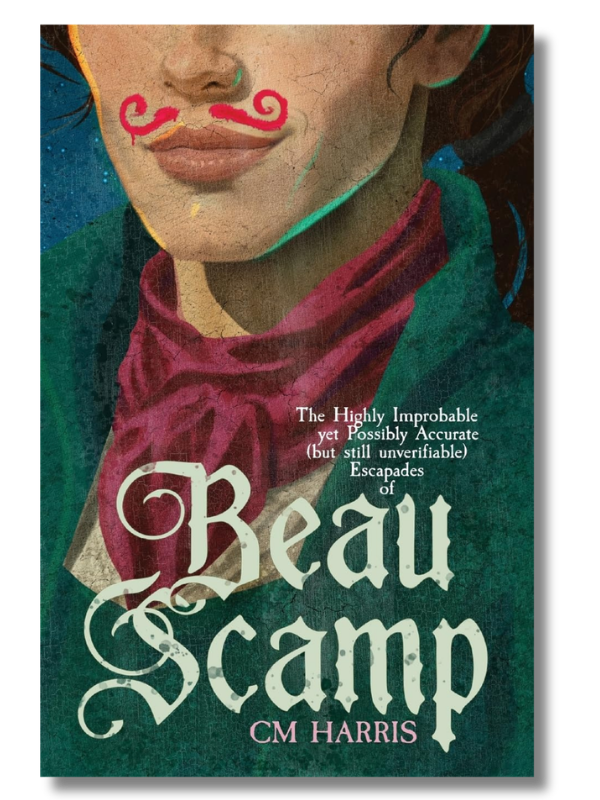
An utterly charming romp of an impossible-to-put down queer historical romance
Beau Scamp by C.M. Harris hits every mark a reader of queer historical romance could ask for. Is there a dashing highwayman? Is there ever. How about an intelligent, underestimated lady? Yes, indeed. And the plot? How does a multi-layered genderbending masquerade fueled by great pacing and first-class pining sound? There’s even an unexpectedly lovely cast of secondary characters. Honestly, I’m not sure I could have asked for more.
Beau Scamp dishes out delicious, Harlequin-worthy historical trappings while putting a believably queer spin on the childhood friends to lovers trope. Set in Georgian England, Beau Scamp is the story of Charlotte “Charlie” Goddard, a “lad-lass” raised in breeches by her highwayman father until he’s betrayed by a friend and hanged. Charlie spends the next year planning vengeance while running the stables at Noyes Hall and robbing amorous, well-to-do ladies as “Beau Scamp” by night.
The set-up is comfortingly familiar—a hero bent on vengeance gets side-tracked by the inescapable reemergence of an old love. Charlie and Lady Catherina Pemberton, the frustrated niece of Lady Florence Pemberton and one of Beau Scamp’s eager “victims,” were great friends as children, but distance grew between them as they aged into their social classes. For all that she is gentry, Catherina is interesting. As a doctor in her own right, she is determined and self-possessed—our hero’s equal in all respects.
“It was all very well that they had inquired about her medical training over dinner, if a bit condescendingly, but that didn’t mean every door had been thrown open. Oh, no indeed.”
Although she cannot wield a pistol with Charlotte’s skill, Catherina is intelligent enough to quickly realize that Charlie is also the “highwayman” Beau Scamp. That she can draw this gender-bent conclusion is due to her unconflicted acceptance of her own preference for women. “The male sex held no sway over Catherina, other than their agency and power.”
Charlotte is a truly dashing hero with all of the rakish charm and self-effacing humor you could want from a highwayman cast in the mold of Wesley from The Princess Bride. “I pulled from my belt one Queen Anne pistol only to remember that while, yes, I had “cocked my cannons,” I had stopped at loading them for fear of actually killing someone or shooting my own foot off.” Meanwhile, Cat is intelligent, responsive and conflicted in ways that are relatable, rather than poorly disguised plot manipulation.
The plot barrels forward once Charlotte and Catherina meet in the aftermath of a failed robbery, fueled not by clichéd angst or convenient misdirection, but by real connection and care. Their emotional and physical chemistry simmers on the page because Charlie and Cat are genuinely interesting people independent of each other, which makes them even better together.
While their romance anchors the story, the cast that surrounds them is rich with humor and subversion. From Cat’s Aunt Florence, a fond and unexpected ally, to Geoff, Cat’s lovely and likable fiancé who has his own reasons for preferring not to marry, the romance plot is greatly enriched by the book’s broader cast. I especially loved Charlotte’s imaginary interactions with her dead father, Stuart Goddard. “They know not your measure, my daughter-squire.” Equally enjoyable are the random servants and ladies who offer their opinions with good humor, “‘Cocked his cannons?’ Lady Waycott sniffed. ‘Typical male, blowing everything out of proportion.’”
Perhaps the most impressive thing about Beau Scamp is its readability. The novel is very hard to put down. The moment one conflict is resolved, another rises up to take its place, providing limitless potential for disguises, pining, and misadventure. The book reaches its natural and satisfying conclusion before I was ready to say goodbye to the characters.
Beau Scamp is a glittering historical romance, one that transports you completely into its world and makes you feel for its people. The queer pairing is lushly historical while unfolding amid comfortingly modern sensibilities. Charlie and Cat are a couple that you can see going the distance, supported in unexpended ways by unexpected people. If a romance novel could be called adorably subversive, then Beau Scamp would be it—perfect for modern readers who like a dashing, roguish woman.



What did you think?