

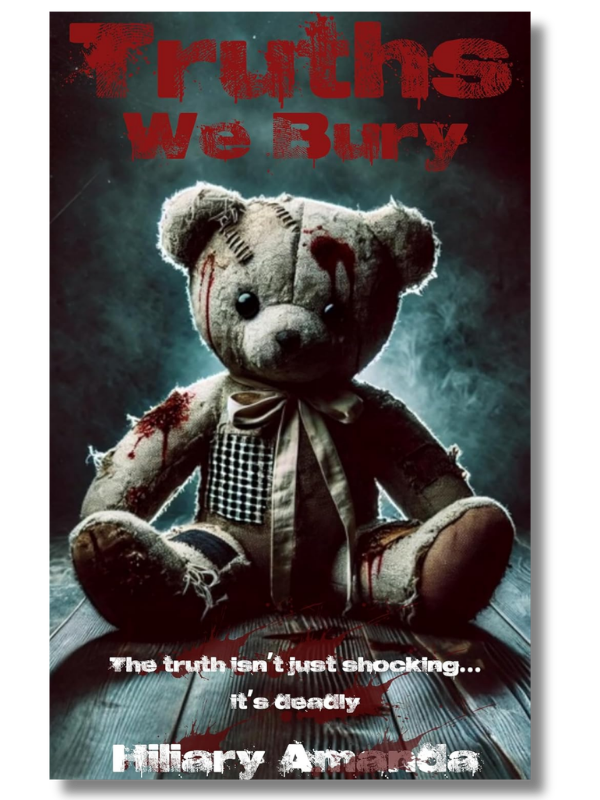
A blood-curdling serial killer thriller that spans generations
The decades-long killing spree of a righteous serial killer in small town America is threatened in this inventive and twisty small town mystery.
All the town’s residents know to steer clear of Joel Whitlock’s farm, even without knowing his darkest secret. An older, foreboding, though not physically imposing, man, Joel obeys a ritual which was passed on to him from his father and which he plans to pass on to his only daughter: that is, murdering the mother of a young child every single year. The victims are women who he deems unworthy of their child, who are in some way abusive. What does Joel do with the babies, however, after he has tortured the mothers?
Local police are at their wit’s end with case after case of missing mother and child. One detective has even gone missing himself while investigating. Recently, Detective Brooks has been assigned to the investigation of the latest incidents, and she refuses to give up like every other colleague of hers has, until she puts together the pieces and builds a trail which leads to the Whitlock farm. Another victim of Joel Whitlock’s is his cloistered daughter, Annie, who is forced to take part in his heinous crimes.
Things We Bury is a deeply original story with great synergy between premise, pacing, and structure. The time jumps between chapters, both backwards and forwards, are painless and wholly natural, even inconspicuous. The narrative chronology works together with the pacing, which is particularly effective as the story crescendoes toward its finale. This is in turn aided by a big surprise tied to a major thread from the very beginning of the book and also majorly connected to its premise. Vagueness is necessary so as to avoid spoiling the book, but it is all to say that here is a piece of well-crafted storytelling.
If structure and pacing—the long view—are the book’s strong points, then description is where it sometimes lacks. That does not necessarily hamper the reader’s enjoyment, as it simply comes across as part of the author’s style. Where the unassuming sentence-to-sentence technique does prove a drawback, however, is in those instances where Amanda opts to tell instead of show, even when showing could have been achieved with just a few modifications in syntax.
Like all good suspense novels, Truths We Bury also excels in psychology. It is about the psychology of filial responsibility taken to the absolute extremes and about the revolution against that responsibility—and how it can seem impossible. It is a unique theme, but it doesn’t distract from the powerful cascade of events. Truths We Bury is a chilling ride through a gloomy mist.


What did you think?