

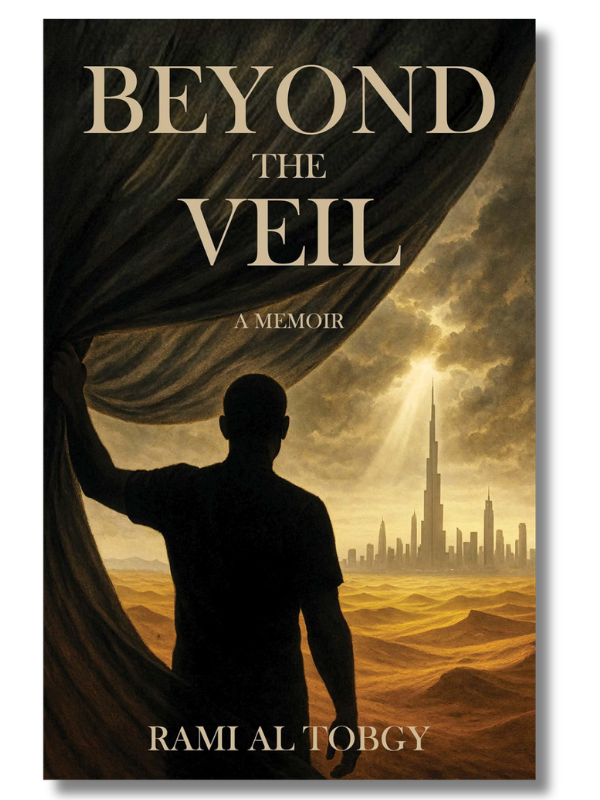
An introspective memoir about life’s setbacks, successes, and the moments that define us
Beyond the Veil is a deeply honest memoir that invites readers not only to pause but also to look back and reflect on their own life experiences. It encourages them to consider the struggles, choices, relationships, and defining moments that have shaped who they are, exploring themes such as resilience, growth, grief, betrayal, parenthood, hope, and love.
Born in Egypt and raised primarily in Kuwait before moving to Dubai as a teenager, Rami Al Tobgy reflects on the experiences that shaped his journey from childhood through adulthood. From surviving the Gulf War, grieving the sudden loss of his best friend Theo, and navigating the pressures of Dubai’s demanding event management industry to launching ambitious businesses that struggled through financial hardship and betrayal, he openly shares the setbacks and defining moments that shaped his perspective.
Alongside these hardships, he writes candidly about the breakdown of his marriage, his battle to raise his son, and the chronic health struggles that forced him to rethink what success and happiness truly meant. The most defining chapters of his life, however, come through fatherhood. The birth of his son shifts his perspective on success, responsibility, and what truly matters, becoming a source of purpose through some of his most difficult moments.
Rather than simply recounting these events, Tobgy looks back on them with the perspective that comes from time, reflecting on how each experience changed him and the lessons he carried forward.
The biggest strength of Beyond the Veil is undoubtedly Tobgy’s openness and honesty. He doesn’t shy away from his mistakes or try to present himself as someone who always made the right choices. Far from it. He openly acknowledges the impulsiveness of his youth, the business decisions he was unprepared to make, and the ways anger, pride, and ambition sometimes clouded his judgment. It is refreshing to see the level of accountability he holds himself to as the book goes on. It shows genuine maturity and self-awareness rather than hindsight used as an excuse. That unadulterated honesty, in a way, encourages readers to do the same—to look back on their own lives with compassion, accountability, and a willingness to grow.
“Looking back, it makes me laugh. I must’ve looked completely ridiculous. All that rage, all that chaos, over something I barely even cared about. But I was a teenager, still driven by ego, pride, and whatever toxic fire comes with being too young to understand yourself.”
I also admired Tobgy’s resilience, kindness, and determination to keep rebuilding despite repeated setbacks. Whether it was losing Theo at a young age, enduring years of debilitating headaches, watching business partners betray his trust, or seeing ambitious ventures and investments fall apart, he continually chose to start again. Even after describing moments where he felt he had “no one who felt solid,” he never completely abandoned his belief in treating others with kindness or helping people without expecting anything in return. Tobgy’s positive outlook on life offers hope and strength to those who have encountered similar situations in their lives.
Beyond its reflections on success and failure, the memoir also explores the fragility of trust. Some of the book’s most affecting moments are not just about the business losses but about the people behind them. Tobgy writes candidly about friendships that dissolved as a result, partners who deceived him, and the loneliness that followed, observing, “You give people space in your life, you let your guard down, and then one day you wake up realising you’re surrounded by strangers wearing familiar faces.” It’s a simple but powerful reminder that some of life’s deepest wounds come not from failure itself but from the people we least expect to hurt us.
Perhaps the most endearing part of Tobgy’s story is his relationship with his son, Adam. Their relationship dynamic is filled with love and admiration for each other. After years of chasing success through businesses, a luxurious lifestyle, and financial goals, Tobgy begins to measure his life differently after the birth of his son. And life isn’t just by what he owns or accomplishes, but by the values he can pass on to his son. His commitment to being present, honest, and intentional as a father becomes one of the clearest examples of his personal growth.
In all, Beyond the Veil is a raw and thoughtful memoir about the experiences that shape us, the people who change us, and the moments that force us to see life differently. While Tobgy’s story includes ambition, success, failure, betrayal, and loss, the heart of the memoir lies in what he learns from those experiences. It is ultimately a reflection on letting go of the need to have everything figured out, accepting the uncertainty of life, and finding meaning even in the moments that hurt the most. As Tobgy wisely puts it, “it might feel unfair at first, but with patience things begin to align, and eventually it all starts to make sense.”
Readers who enjoy reflective memoirs and personal stories of perseverance, self-discovery, and the search for purpose will appreciate and connect with what Tobgy has to share in this debut memoir.




What did you think?