

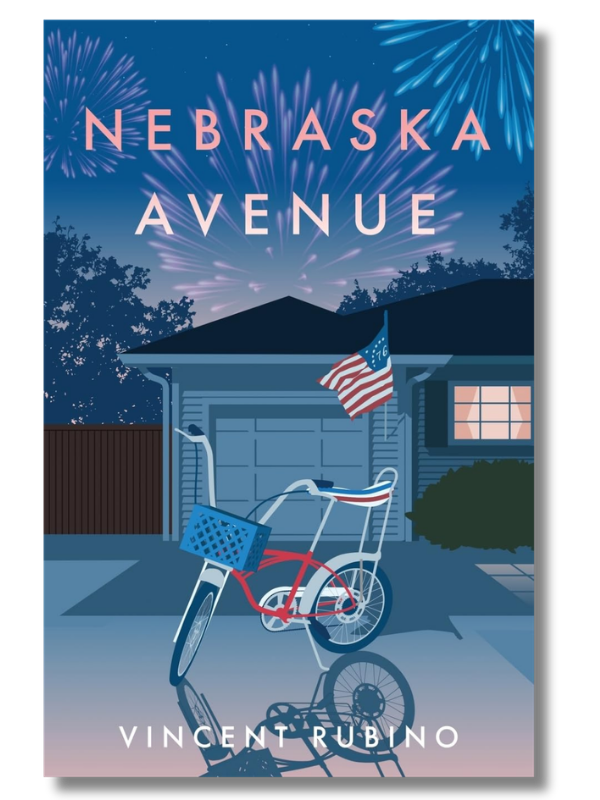
A delightful summer, a paperboy mystery
Set in the sun-bleached haze of the Bicentennial summer of 1976, Nebraska Avenue delivers exactly the kind of easygoing, nostalgia-tinged vibe that comes with the smell of cut grass, hot pavement, and a bike bell echoing down a quiet suburban street. It’s a light‑hearted, breezy young adult novel packed with neighborhood adventures, youthful mischiefs, and a sprinkle of mystery that captures the essence of a carefree summer.
Fourteen-year-old newcomer Vinny Perino is still finding his footing after moving from Brooklyn to Long Island when he joins a crew of local paperboys delivering newspapers along Nebraska Avenue. But Vinny soon finds out that being a paperboy means far more than just folding papers and riding routes. Through his new job, Vinny forms an endearing bond with the paperboys’ crew—a lively mix of personalities who fill their afternoons with witty banter, hangouts, and harmless trouble (well harmless most of the time).
Vinny’s summer takes an unexpected turn when a string of burglaries rattles the neighborhood, causing suspicion to fall on the paperboys, most especially on Vinny. To save their own, the paperboys’ crew decides to take matters into their own hands, catch the real culprits behind the break-ins, and reveal the truth in time.
It’s easy to become immersed in the world of Nebraska Avenue. Author Rubino vividly captures the atmosphere of a hot summer in 1976, bringing the era to life through the rhythm of newspaper routes, quiet suburban streets, and the routines that shape the boys’ days. Rubino’s storytelling doesn’t just describe the time; it recreates it. Summertime is felt, and so is the nostalgia of the atmosphere.
“There were no hills, humps, or bumps on the smoothly paved roads of North Bay Shore… As a result, imagination was key to logging the miles needed to run a newspaper route every day of the year but Christmas.”
Structurally, the mystery is straightforward and simple, but that simplicity works well and matches the overall light tone of the novel. There’s no overcomplicated investigation or dark twist. Instead we have thrill and excitement in watching the crew piece together clues, hold secret meetups, and hatch strategies that are a little too dangerous for them. Rubino manages to hold the suspense concerning the burglars and still keep the story engaging without ever losing its warmth. But Nebraska Avenue is less about the crime or the mystery itself and more about what it reveals: loyalty, courage, and the way friendship can turn ordinary days into unforgettable adventures.
The true heart of Nebraska Avenue lies mostly in the bond shared by the paperboys’ crew and their lone girl paperboy companion. I loved their friendship dynamics. It feels authentic and naturally builds from the moment we’re introduced to the group. Rubino captures the teasing, the goofiness, the teenage curiosity, and fun rendezvous of the group. They are a loyal bunch, too. Always ready to help their own. Readers who enjoy stories about friendship and close-knit community will find much to appreciate here.
“Under ordinary circumstances during the summer, Artie and Wally wouldn’t encounter anyone who lived very far from their particular block of Nebraska Avenue.But the paper shack was the great melting pot of thirteen- and fourteen-year-old children of North Bay Shore.”
Ultimately, Nebraska Avenue is a warm, engaging coming‑of‑age story that blends humor, mystery, and nostalgia into a single, sun‑drenched adventure. It’s a celebration of youth, friendship, and the memories that shape who you become and stay with you for a long time.






What did you think?