

Getting book reviews ain’t easy.

It takes time. Preparation. Organization. Money (probably). Skill. Patience. It takes success to make more of it.
But it’s also deeply rewarding in more ways than one. Reviews are powerful marketing tools. They help you find readers and learn how you are satisfying them.
I’d love it if you published your book in July and all you had to do was watch the reviews come in. But unless you’re Sarah J. Maas or Freida McFadden, you’re probably going to have to do some work behind the scenes to make it happen. (Heck, even they’re going to try behind the scenes too.)
In publishing and marketing, you can either do the work yourself or you can pay for it.
But you cannot just pay for customer reviews. (And if someone is asking you to in your inbox, RUN).
However, you can use resources that will save you time to do other marketing and publishing tasks. And you could use that time.
Here are some options for getting your time back.
Subscribe to Write Indie
Let’s get the easiest one out of the way first.
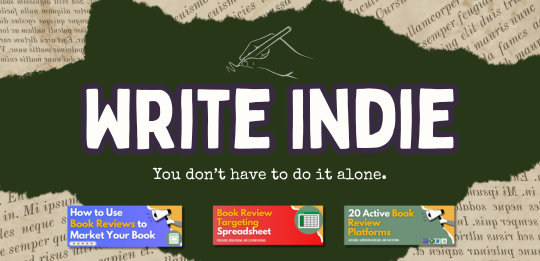
Write Indie is my baby.
I’m a book marketing guy. I worked for indie presses, I pitched thousands of reviewers, wrote descriptions, designed press releases–you name it, I tried it. Now I run a website that reviews small press and self-published books, receiving hundreds of pitches each month.
Every two weeks, I write about what’s new and useful in the world of book marketing. And since I’m a guy who wrote a book on how to get book reviews, I put a whole lot of attention on that facet of marketing. Come hang out if you like in-depth, laid-back emails on all things indie publishing.
But in addition to emails every couple weeks, I’ve got three freebies that you can benefit from right now: an ebook on how to use book reviews to market your book, an essential book review targeting spreadsheet to help you catalog your review journey, and twenty platforms who are accepting books for review right now.
Email marketing platforms
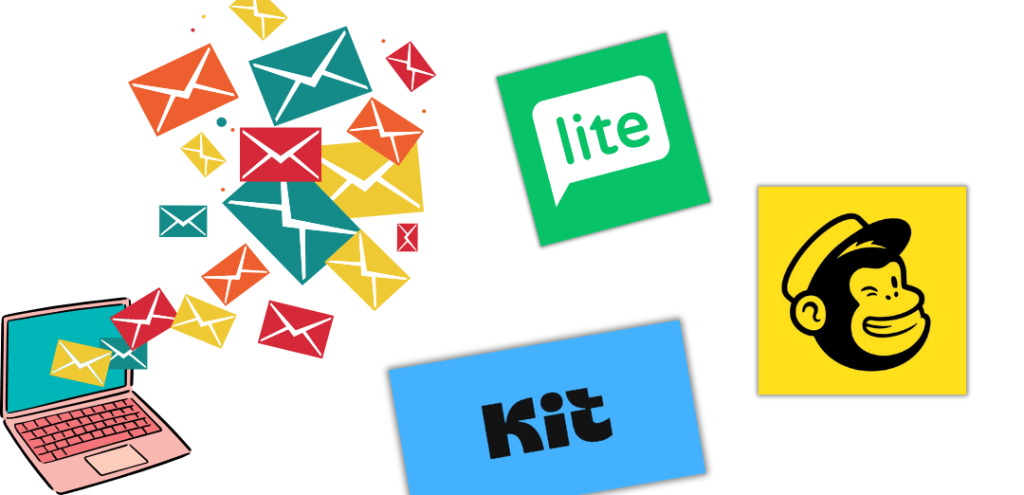
You might already have this! Mailchimp, Mailerlite, Kit; the list of email services for authors goes on. If you want to grow your readership over time, you’re going to want to keep them engaged and updated. Social media is good for that. But it is not as good as email (for most people).
Did you notice that when you post a review request on social media, it feels a little desperate? It’s not. You can definitely do it. But probably only once a year. You’ll want to spruce it up with a graphic, a story, or jokes, but it can still come with mixed (if not bad) results.
But with an email marketing service, you can ask every single person who signs up for your newsletter in their private inbox, without having to hit the send button.
The way to do this is with something called an Email Automation. If you sign up for Write Indie, you receive five emails from me in five days, ones I am not writing fresh for each new subscriber. Those first five emails are my Automation. A sequence that goes out to everybody who signs up. I wrote them once, and then they work their magic all on their own. In an Automation, you introduce yourself, offer a freebie, provide a few things of value, and pitch your book.
Since you can schedule these things out ahead of time, you can set up a review request thirty or so days after set-up that asks them for a review with a clickable link. They’re still in the window of time when they’re most interested in you, and they’ve been given enough time to read the book if they signed up for your newsletter right around the time they started reading.
Google Forms

Here’s another resource that takes no time after you set it up. And this one’s free!
On your website, I’d recommend having a sign-up form for people to request review copies from you. These can come from media members or customer reviewers as long as you communicate correctly.
You might not see a lot of requests early on, but don’t count this tip out yet. Give it time. If you have people visiting your website, you’ll have people wanting to review you. And if you don’t have to pitch them, they’re already very interested in you.
Here’s an example of mine: https://forms.gle/itojYRBnNWuSnEKR8. As you see, it can be very simple. (And fill it out if you dare!)
Book review sharing websites
Remember how I said I like to save time?
Well, forget about that for a second!
Instead, give your time to other hard-working authors, read some cool indie books, and watch it pay off in the long run with customer reviews.
Pubby.co and BookBounty are websites where you pay a small-ish fee every month to read indie books, get a “snap” or “point” for reviewing it online, and then use that point to request reviewers to review your book. It’s a clever little work-around. Amazon doesn’t let you review authors’ books who have reviewed your book (“review swapping”), but you can totally review other authors’ books and ask other authors to review yours.
Of course, this only works if you have the time to read fellow authors’ books. I like it because it helps everybody. Other authors need reviews too. (Oh, and reading indie books is cool. Did I mention that?)
Bookfunnel or StoryOrigin
Think of Bookfunnel as a better Google Form. Instead of going to a form, readers are sent to a customizable landing page where they can request your book for review and download the ebook in real time without signing up for anything. So you won’t have to pop in after the Google Form to send the book.
But that’s not why I like it so much. I like it because Bookfunnel sends those downloaders timed review requests. It can even connect with your website if you’re selling on something like WooCommerce and request reviews from the people who bought your book off your website. You can give them the option to sign up for your newsletter as well and deliver your freebies.
Storyorigin is a similar option.
Editorial review platforms
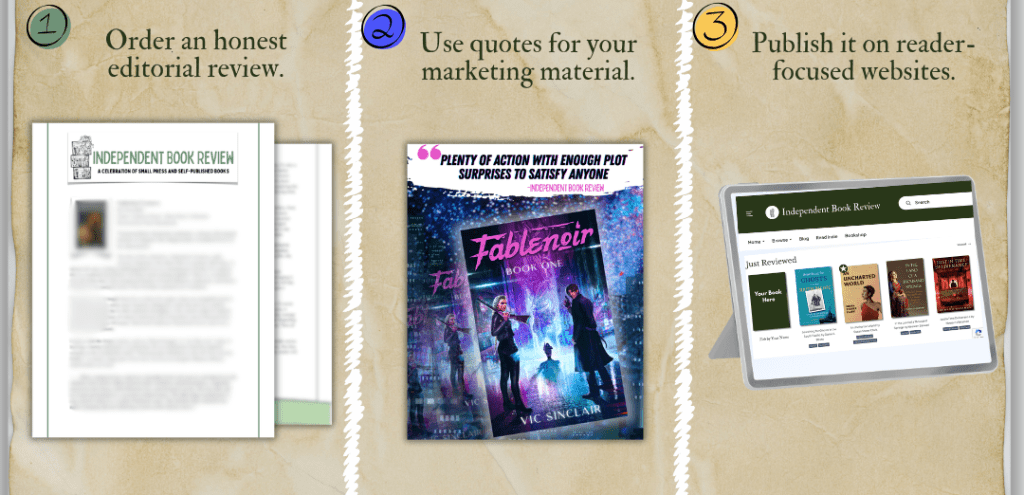
You can’t buy customer reviews, but you can buy editorial reviews.
It’s difficult to get media and trade reviews as an indie author. You’re battling the giants for media space. (In most cases.) And if you don’t have many personal connections to high- or low-profile authors to write blurbs for you, you can try getting reviews from media platforms for free, but you can’t guarantee that you walk away with (m)any. And if you’re trying to have multiple editorial reviews on your Amazon page and Amazon A+ graphics before publication, you can’t guarantee the timeline in which you get them.
Unless you pay for them.
Remember: You aren’t paying for good reviews. You are just paying for a spot at the top of their reviewers’ TBR pile. If you need quotes to use on your marketing material, paying for editorial reviews is your fastest, surest way to do it.
Here are some platforms that you can pay for reviews:
- Independent Book Review (my personal, biased favorite)
- Indie Reader
- Booklife
- Kirkus Reviews
Goodreads Giveaways
You can give away about 100 ebooks to interested readers on Goodreads for $119. After those 100 readers read the ebook for a while, Goodreads sends them a review request. Since they have to be Goodreads members in order to request books, they might already be reviewing books.
And Goodreads ratings are starting to show up on Amazon product pages! So if you have 20 reviews on Amazon, you might have 40 on Goodreads. It looks like different people are reading your book. That’s the social proof you’re looking for.
I ran a Goodreads Giveaway for my book back in November 2025. It was up for two weeks, and 544 people entered to receive a free copy. 501 of those people added it to their Want to Read list, which might show up on their Amazon pages when they’re buying books. My book is in a less-popular category on Goodreads than, say, a mystery thriller, so other genres could get even more people who entered. I ended up with three Goodreads reviews as a result. It’s not groundbreaking numbers, but it’s something.
Free & discounted promo sites
If you put a review request at the back of your book, every single reader who reaches the end will be a potential reviewer. If you put a clickable link or a dynamic QR code, you make it easier on them.
So when you discount your book and advertise that discount on a popular newsletter, you are putting yourself in a good position to get downloads.
If you or your publisher enrolls in KDP Select, you can offer the ebook for free for 5 days out of every 90. You might not think it’s beneficial to make $0 on a sale and pay for people to see it, but if you get 800 downloads, you’re crossing your fingers that some of them are reaching the end of your book and your review request page.
It’s obviously not guaranteed that you walk away with reviews after this, but I’ve received multiple almost every time I ran an advertisement on a promotion site.
You might want to check out Bookbub, Written Word Media, or Fussy Librarian as options for this.
Google Sheets
If you signed up for Write Indie, you probably already know about this. Hence: the end of the post!
You should be researching and pitching reviewers in order to get book reviews. The only way to make sure you don’t get lost in the process is by organizing yourself. Google Sheets is a free way to do that.
Just separate the review pitches by category (like blurbs, media reviews, launch team members, and customer reviews), add the person’s name, email, the angle from which you’ll be pitching, and the date you pitched them. That way, you don’t duplicate pitches or lose track of who said they’ll leave a review but haven’t come around to it yet.
And of course, The Truth.
About me
Joe Walters is the founder of Independent Book Review. After falling in love with reading and writing at Kutztown University, he did the only thing he could think of: quit his teaching job, become a server, and write as much as possible.
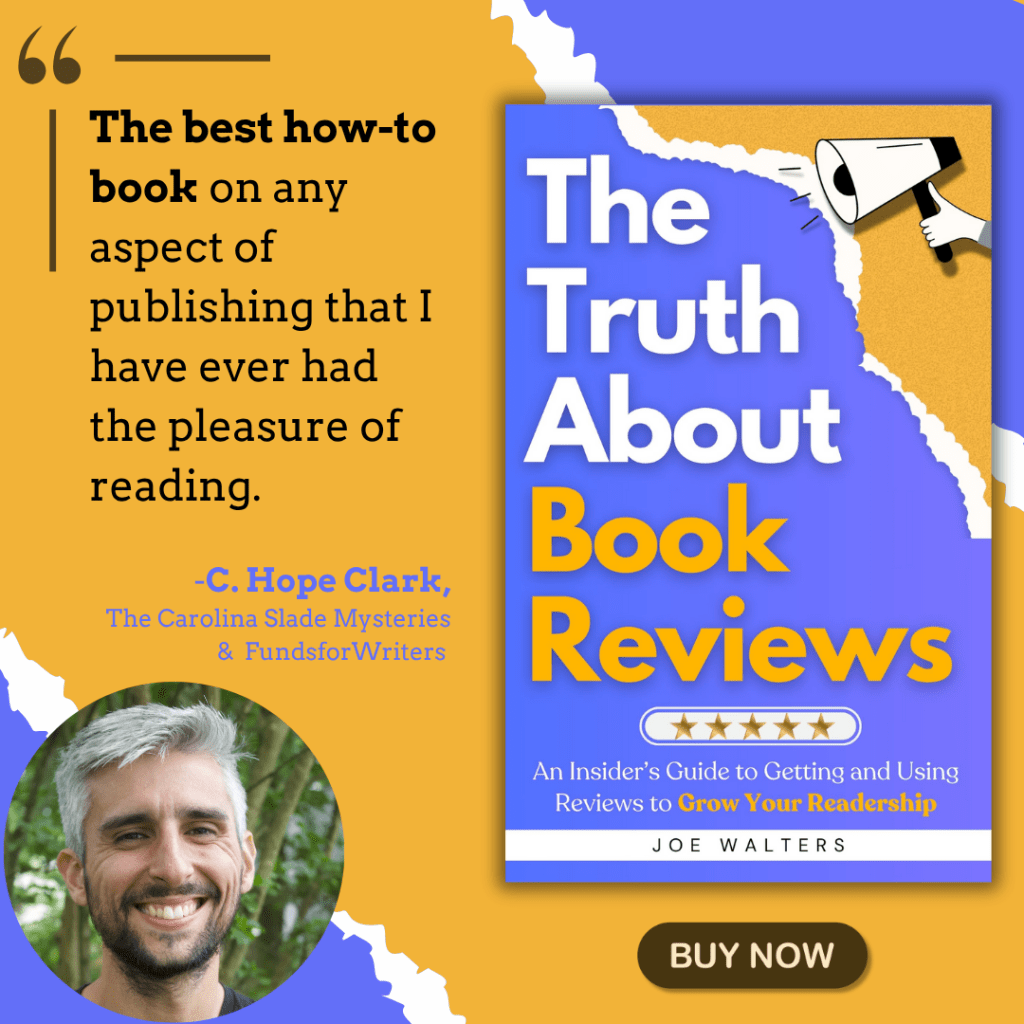
When a local job in publishing popped up on a job board, he traded in his PF Chang’s apron for a bookish t-shirt and has been promoting indie press and self-published books ever since. He’s also the author of The Truth About Book Reviews. When he’s not writing or doing editorial or promotion work, he’s playing with his kids or reading indie books by Kindle light.





What did you think?