

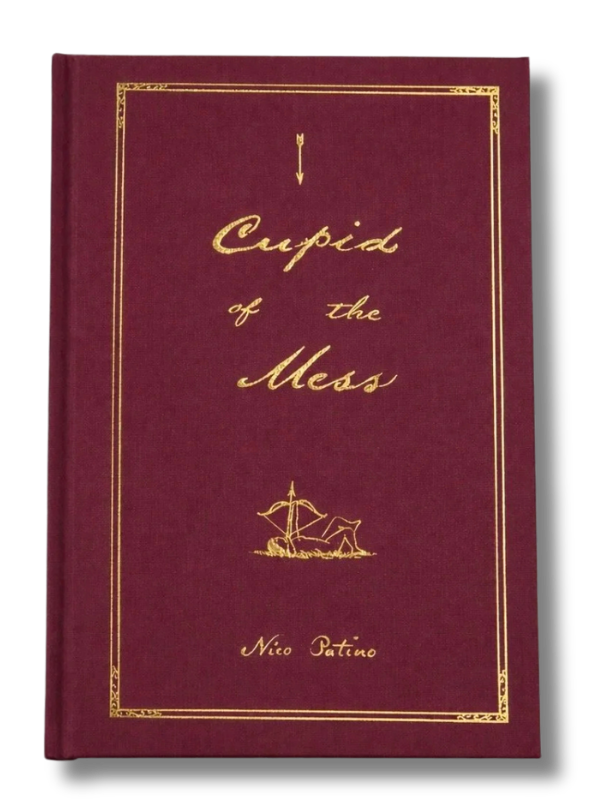
A fluid, introspective collection fueled by natural imagery, self-reflection, nostalgia, and experimental structures
Utilizing a variety of experimental structures and forms, the poems in Cupid of the Mess dive straight into all of life’s messiness. Romance is the overall underlying conceit, but, in the case of these poems, the word “romance” doesn’t just apply to yet another relationship.
The speaker in these poems develops and maintains a romance with not only the occasional special someone, but also the world around them. The speaker’s adoration of, respect for, and engagement with the world—and the gifts of experience and enlightenment the world offers—is evident in every poem. Thus, Cupid of the Mess leans heavily toward the Romantic, blending all of the tradition’s best characteristics with contemporary settings and depictions.
“el nido de quetzalcoatl,” with its direct address to “Mother” and its longing for childhood, is one of the best examples of the collection’s contemporary Romanticism. The speaker portrays the mother-figure as consisting of “jutting, cutting, / unplanning angles” and “unassuming, unrelenting / unbeatable forces.” The mother-figure’s image becomes a source of personal strength and rejuvenation for the speaker, returning the speaker to a place where they can recover their strength and their potential. Therefore, “el nido de quetzalcoatl” is a beautiful homage to the origin stories, as well as the places and the heritages, which help recenter an individual in a world where they can quickly lose their sense of self.
“in some ramen shop” reads like a subtle set of guidelines for living a good, fulfilled life. “Bring nothing but your divine mannerisms,” the speaker commands. They continue: “shower the world in your soft approach to teach word, / and I will admire patiently.” As the poem continues, the lines ebb and flow—literally:
“Let it into your eyes before me, like a burst
of immortal dawn.
Experience my love, become my poetry
and I will let my heart take root.”
The careful tabbing and indentation emphasize these reflective anecdotes of personal growth and development. Thus, encountering change—and learning to embrace it and all it offers—is another of the affirming, positive messages Cupid of the Mess offers.
Cupid of the Mess, in its realistic, frequently gritty portrayal of life and love, aging and nostalgia, is Bukowski-like. At times, it is also existential, and four-line blips like “pisces” disrupt the collection’s flow. This disruption is jarring, disorienting—perhaps even artistically and philosophically so.
Its poems delicately balance chaos and calm, creating a meditative space for those who enter its pages. The keenly observant and self-aware speaker, too, pushes the book’s audience to think about their own experiences—thus building universality with their audience. Cupid of the Mess swirls poetically and pulls its audience into its fold, holding them there comfortably.



What did you think?