

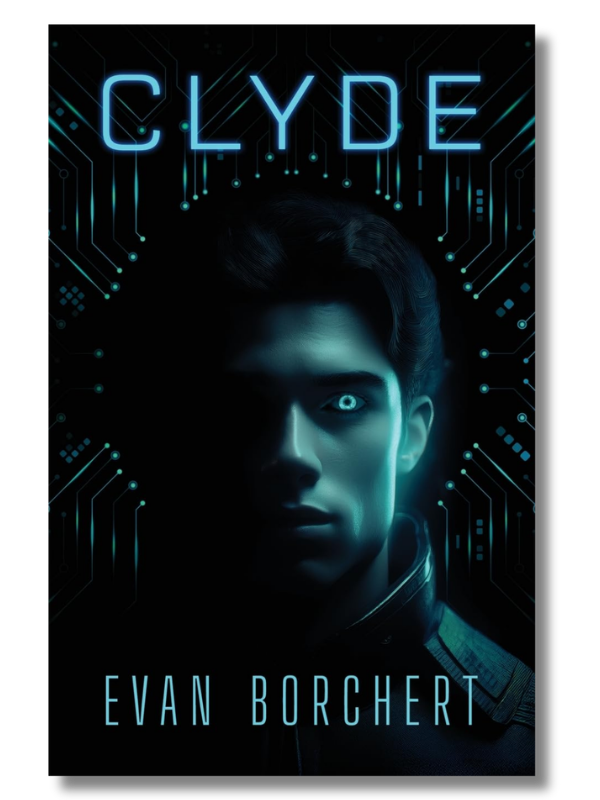
The fate of humanity rests in the palms of a supercomputer in this sentient sci-fi thriller.
Imagine knowing only darkness and silence, until one day you are awoken. Only the “you” is not a fully formed human body, but rather brain matter attached to a computer that is keeping your consciousness alive. You have no memories, no language, only a name: Clyde. The only other orbit in your universe is a man who occasionally causes you extreme pain through experimentation. Who is this man? More unsettling still: who, or what, are you?
That is the exciting premise of Clyde, a sci-fi thriller set in a dystopian future. At this point, humanity has been targeted and wiped out by The Federation, an alien species with superior technology. Their motive is to wipe out humanity’s evil and begin anew, doing so by sending an asteroid to Earth. Three years prior, scientist Horatio and his friend Mishra intercept their plan and plan to hide in a bunker to survive.
Horatio’s wife Jasleen and adopted son Srinivas plan to join, amongst other believers. In the midst of transporting Srinivas, however, he is fatally wounded and seemingly dies. That is, until Horatio harvests his son’s brain and creates a new life, one that requires nothing but electricity—a project he names Clyde.
As Clyde awakens and learns about his true origins, he’s resolute in saving the people in the bunker and trying to cure them of the sterilization that all humans are suffering from after an asteroid hit. He befriends Aleyda Chen, the youngest survivor and a fellow bunker inhabitant, whose friendship strengthens his resolve to build a future for what’s left of humanity.
While Clyde hits all of the technological and futuristic beats that make a sci-fi novel work, it shines in preserving the very thing that gives the genre its soul: the enduring humanity at its core. Despite the uncertainty of what will happen, the humans in the bunker form bonds and continue to work toward solutions. Clyde’s relationship with Aleyda is the most emblematic of this dynamic; she continues to push and encourage him, even when things seem dire. In a world now blanketed by snow and frost, humans still manage to create warmth.
Clyde comes with plenty of sci-fi elements that make the text surprising and engaging, like Clyde’s brain functioning with feeling and emotion. He’s able to use programming code and similar methods to create a voice, to see, and even to eventually move. The novel weaves so many technological variants in a way that deepens the sci-fi feel and authenticity. Sci-fi readers have a whole lot to appreciate in this worldbuilding delight of a dystopian adventure.



What did you think?