

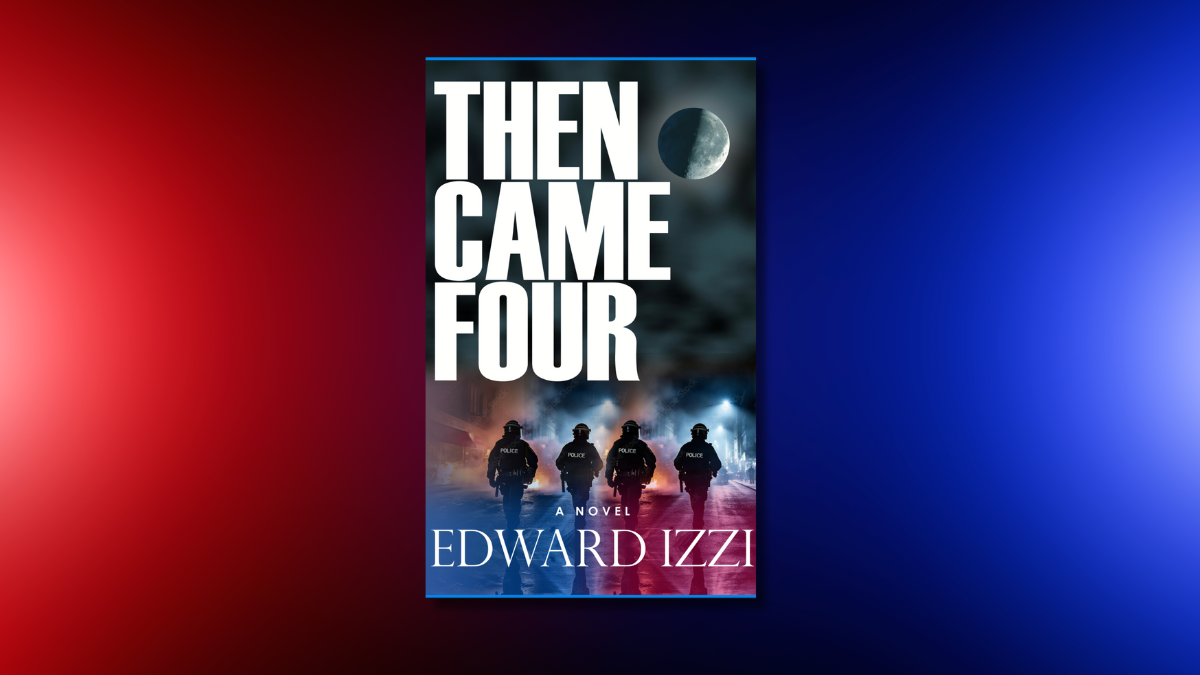

Then Came Four
by Edward Izzi
Genre: Mystery, Thriller & Suspense
ISBN: 9798875553240
Print Length: 328 pages
Reviewed by Kathy L. Brown
In a riot-torn, 1960s Detroit, an affluent young attorney casts his lot with the city’s most marginalized citizens, going up against police corruption. But will his stand make any difference?
Then Came Four explores the violent history of 1960s Detroit through the lives of three young professionals: attorneys Tony Fiorello and Wesley Norris as well as journalist Joanne McGarrity.
An emotionally intense prologue introduces “The Big Four” of the book’s title—a four-man special tactical squad attached to the Detroit Police Department’s Thirteenth Precinct. Supposedly charged with inner-city crime prevention, these men have free rein to unleash their deep-seated racial prejudices and personality disorders on the Black citizens of Detroit, and they do so graphically.
We also meet the people who oppose these police officers and the corrupt system that supports them. Joanne is an up-and-coming white newspaper reporter, relentlessly digging for information about what’s really going on with policing in Detroit. Wesley is a brilliant, deeply committed Black lawyer who joins the district attorney’s office right out of law school, aiming to bring some justice to the situation. Tony, Wesley’s best friend from law school and eventually Joanne’s love interest, is the odd man out. After growing up white, rich, and connected, he’s become a bit of a brat. But Wesley dragged him through law school and bright, assertive Joanne loves him. Thus, Tony is the observer of events swirling around him, his friends, and their community, continually resisting the call to action.
The status quo blocks Joanne and Wesley whenever they seem to be making some inroads against The Big Four and the political interests they represent. And each time Wesley or Joanne fail, their personal safety becomes increasingly at risk. Meanwhile, unrest and protests sparked by events such as the Vietnam War escalation and the Martin Luther King and Bobby Kennedy assassinations increase the pressure on police to maintain order in cities across the United States, especially Detroit.
Tony, as a first-person narrator, tells us his story. And although the tale, in turn, focuses on various other characters, Tony is Then Came Four’s protagonist. He’s the person called on to grow and change, to risk a comfy and safe lifestyle as well as his family ties for the greater good. The story becomes quite engaging when Tony accepts the challenge and begins to live his life proactively.
The book’s villains, The Big Four officers and the hierarchy who protects them, are simply evil individuals. Even if the men can function compassionately in their personal lives, they are so corrupted by the police department culture that merely putting on their uniform each day dangerously warps them.
1960s Detroit is a vibrant background for this story, from the popular culture of music and fashion to the telling details of various neighborhood enclaves throughout the city. We get a real sense of the city’s people, a lively mélange of ethnic and religious groups, who are potentially as capable of working together to build a great enterprise as they are of tearing each other apart.
Much of Then Came Four is told in a summary style, although when scenes are used, they are dramatic and effective, revealing much about the complex characters as well as advancing the story.
The book successfully explores social justice as a theme as well as each individual citizen’s obligations to the rest of society, particularly the duty of people who are gifted with intellect, ambition, or material resources. This is a lesson Wesley tries to teach Tony—his hero’s call to action. And ultimately the turning point of Tony’s story. “I remember Wesley questioning my career choice when I started working at the firm. He kept telling me that I had an obligation to change things. He kept telling me that I had some responsibility to use my legal talents to try to fix the things that were so morally wrong around us.”
This book is a gritty thriller, dealing with rough individuals who commit heinous crimes. Readers may encounter disturbing language and situations. Lovers of recent history and legal dramas will enjoy Then Came Four. Parallels in the story to current events are obvious, and perhaps this book will shed some light on the complicated topic of policing in the United States.
Thank you for reading Kathy L. Brown’s book review of Then Came Four by Edward Izzi! If you liked what you read, please spend some more time with us at the links below.




What did you think?