


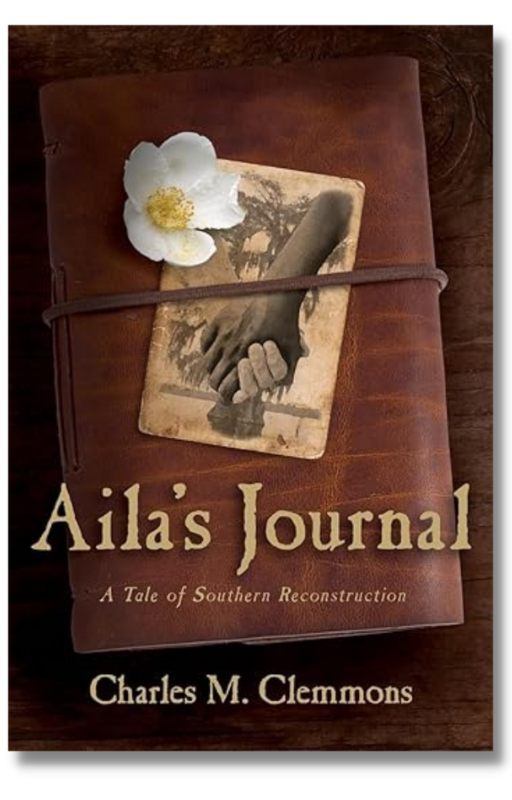
Aila’s Journal
by Charles M. Clemmons
Genre: Historical Fiction
ISBN: 9798987634912
Print Length: 314 pages
Reviewed by Warren Maxwell | Content warnings: slavery, rape
Raw and poignant—an intimate portrayal of life during the American Civil War and the violent years that followed it
Forced into indentured servitude by the death of her father in the Civil War, thirteen-year-old Aila finds herself on the Sanders farm serving a pregnant mistress, her mercurial husband, their six slaves, and an aggressive overseer.
A series of tragedies foreshadow the eventual Confederate loss and thrust Aila into an unlikely friendship with Mary Jane, an enslaved girl of her own age, and the farm’s mistress Miss Ginny. This book tells the story of Aila’s coming of age alongside a postbellum South—marrying, having children, protecting her family, all the while contending with a devastated economy and the shifting faces of racism and sexism.
“‘Well, thur’s more than one now. I started a long time back. I was thankin’ it was fur mah children an’ grandchildren after I’m gone. But maybe I’ll let yuh see ‘em someday before then.’
Calum reflected on what seemed a beautiful idea of a journal, preserving your private feelings and memories for yourself and your descendants. A kind of life story.”
Scrupulously educated by Ginny, Aila learns to read and write—first using her education to illegally teach Mary Jane, later keeping a diary of her own against her husband’s wishes. In Aila’s Journal, the end of slavery, the rise of sharecropping, the struggle of farm-owners to survive following the Civil War, and the Jim Crow era are vividly depicted. These large historical events are grounded in Aila’s intelligent, nuanced character, embedding evident research in a powerful narrative. Consistent modification of dialogue matches the accent and tone of poor southerner speech patterns, firmly evoking a sense of place and time.
“‘Some White people call Negro people all kinds of hateful names. Like the river, those names don’t have much to do with what the Negroes really are. But White folks like to think they’re better than colored people. So they call them hateful names, put them on the bottom, and try to keep them there.’”
The novel gives special attention to the injustices and prejudices faced by women, even those who existed in positions of relative comfort and privilege. There is an ever-present threat of beatings and a strict hierarchy enforced between the sexes. Indeed, Gideon, Aila’s husband, courts her with fiddle songs and sweet words, only to strictly enforce his authority once they are married. Sexism comes to a head multiple times throughout the novel with graphic depictions of rape and brutal violence. This is not a book for young readers.
“Aila’s attention turned to the Quartermaster Sergeant. ‘How come yuh fightin’ with the Yankees, Mister Robert? Yuh know yuh brother is fightin’ with the Confederate boys. Y’all on opposite sides!’”
Cinematic in its scope of characters and history, Aila’s Journal captures life as it is lived in complex times. Aila grows from a scared teenage girl to a grandmother with lifelong friends and firmly held convictions. The character development is rich and extremely satisfying, however the historical period often appears oversimplified—difficult debates are rendered into simple black and white distinctions. When Robert, Gideon’s brother, returns from the war as a Union soldier, he easily reintegrates back into his Confederate family and society. Dramatic dialogue loosely disguises such easy resolutions.
There are many progressive declarations that feel designed for modern readers rather than relics of the historical period. This feels out of step with the decisively adult nature of this book’s violence and strong character relationships. Still, the research and historical detail brought to this novel is impressive. The emphasis on poor whites, indentured servants, and the Civil War’s enduring impact on the landowning south is fresh and runs counter to many contemporary discussions in a way that feels both provocative and authentic.
In Aila’s Journal, a young indentured servant comes of age during the Civil War and the proceeding decades, observing a cyclical pattern of prosperity and devastation as the American South battles with slavery and justice in a rapidly changing world.
Thank you for reading Warren Maxwell’s book review of Aila’s Journal by Charles M. Clemmons! If you liked what you read, please spend some more time with us at the links below.


What did you think?