

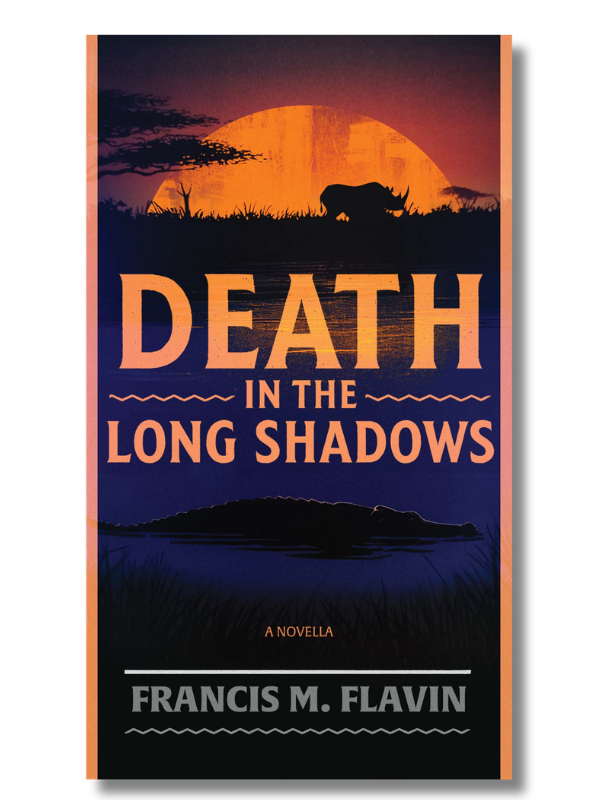
An atmospheric homage to the classical safari tradition
In Death in the Long Shadows, Francis M. Flavin transports readers to the stark and intoxicating African wilderness, where Coloradan hunter Paul Thayer embarks on a challenging quest for the infamous Cape buffalo, nicknamed in hunting circles, “black death.”
Alongside his seasoned professional hunter, Johan, and a team of trackers and rangers, Paul must navigate the perils of the wild and the perilous depths of morality—his own and that of his fellow man. Against the backdrop of the complex dynamics of a safari camp—reckless clients and trophy seekers—as well as the wide floodplains of the hunt itself, Paul ruminates on the ethics of hunting and the personal courage it takes to face one’s fears and confront mortality.
Readers will be absorbed in Flavin’s stylistic prose. The African landscape is vividly rendered, and the hunting scenes are dense with tension and anticipation like the long grass itself. Paul’s gradual shift from fear to respect for his surroundings offers a reflective, thoughtful arc that elevates the adventure beyond simple action and offers a meditation on ethical hunting and the contrast between those who respect the land and those who exploit it.
Rich in atmosphere and immersive detail, Death in the Long Shadows offers a rewardingly layered narrative featuring the delicate interplay between humans and wildlife.
While the novel excels in atmosphere and reverential prose, it at times feels less certain in its sense of purpose. Much of the book’s energy is dedicated to recreating the tone, cadence, and spirit of the classical safari tradition—but some readers may feel as though the homage occasionally eclipses the story itself. Elements that seem poised to carry symbolic or thematic weight often remain atmospheric, rooting the story in motif. The resulting narrative gestures toward larger questions of morality, mortality, and consequence, while leaving these themes open to interpretation.
Death in the Long Shadows remains a steadfast homage to classical safari literature, evocative and carefully crafted. Its vivid landscapes, ethical reflection, and exploration of fear and courage ensure that readers are both entertained and prompted to think about the responsibilities we bear in the natural world. Flavin’s clear respect for the setting, the rituals of the hunt, and the dangers inherent in both is evident on every page. The book’s greatest strength lies in its atmosphere—inviting readers to sit with discomfort, danger, and awe.



What did you think?