

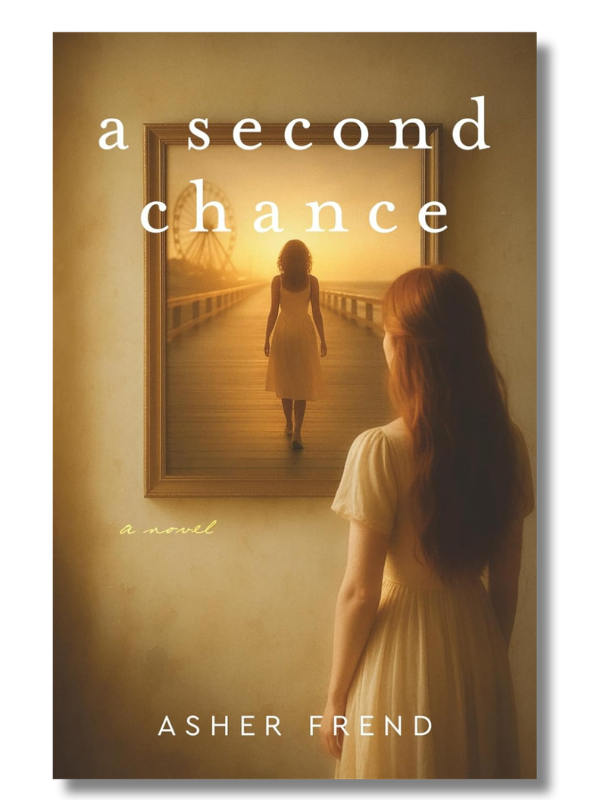
A poignant coming of age story that speaks on faith, morality, tragedy, and the day to day emotional turmoil that defines young adulthood
“Chara’s eyes snapped open. She sat up in bed, her stomach twisting with nausea. She grabbed her journal and scribbled down the dream from memory, but the sense of impending dread lingered, weighing on her body like a heavy fog.”
Set largely in the early 2000s, A Second Chance follows a group of teenagers as they navigate family traumas, peer pressures, and the longing to feel loved. Chara and Mikaila are high school best friends, but their friendship begins to change when Chara has a devastating car accident and Mikaila is visited by a dream of God.
In it, she asks to trade her life for Chara’s and also promises to ignite Chara’s faith. Chara ultimately survives, and she begins having visionary dreams of her own. Soon after, a resentful, bullied teenager named Asa starts pursuing Mikaila. He lives near her estranged father, and, as Mikaila’s home life takes a tragic turn for the worse, she moves in with her father for the summer, leaving her boyfriend behind.
Asa plays on the chaos unfolding around Mikaila and Chara to insinuate himself into their lives and those of their friends via instant messages, phone calls, and eventually, sexually charged video calls. Every slight and mistreatment he receives at the hands of his mother, his older brothers, and local girls, are channeled into manipulative behavior. As a chess champion, he slowly plays the friends against each other and makes them more and more dependent on his emotional validation.
“Chara smiled, and her cheeks flushed beet red. Asa grinned, running his fingers through his hair. He enjoyed watching her get a little anxious around him.”
The psychology of the novel’s teenage characters is rendered with deep care and attention. Their inner lives are convincingly messy—earnest but inconsistent, perceptive to some things and blind to others. Often, we see Chara and Mikaila justify things they they can’t name, rationalizing discomfort around Asa’s behavior, explaining away glaring red flags, and mistaking dark intensity for intimacy.
“‘I’d spent so long trying to save Chara—telling myself her heart had changed, that she’d lost her way somehow—but this wasn’t that. She hadn’t drifted. She’d been pulled. Caught up in something reckless and wrong with Asa Finn.”
However, this psychological insight is not always matched at the line level. For a dialogue-heavy book, speech can sometimes feel stilted. Characters talk and use vocabulary that sounds more explanatory than organic. This bleeds over into the narration, which has a tendency to explain or describe motivations rather than simply allowing events to unfold. As a result, the flow of the plot and moments of ramping tension can be bogged down by language.
All of the characters feel awkward in themselves: Chara is trying to recover her self esteem after being disfigured by her car accident; Asa is trying to live up to the high bar of his football state championship winning brothers; Mikaila is striving to excel past her older sister at track while growing up in a home with a mentally ill mother and her grandparents. The dangers, obstacles, and joys of adolescence are all on full display.
“None of my accomplishments mean anything to you, Asa thought as he walked toward the stairs. But the second you think I’m acting like the golden child, suddenly I’m worthy of the car.”
This sense of the chaos of youth comes to the fore as the book moves between the different characters. Each has a slightly different voice and style of engagement—the narration is first person for Mikaila and a close third person for Chara and Asa. And while Chara is often muddling through her own thoughts, Asa is colder, more clinical. These different registers allow for deeper levels of connection and relatability to be established with the characters. It also brings texture to their beliefs. Faith becomes a lightning rod for good and bad, a powerful force for good that can be co-opted that must be reckoned with.
A multilayered story of youth, belief, and the ways in which our vulnerabilities are both strengths and weaknesses, A Second Chance imagines a tight knit high school friend group being torn about an insidious force.




What did you think?