

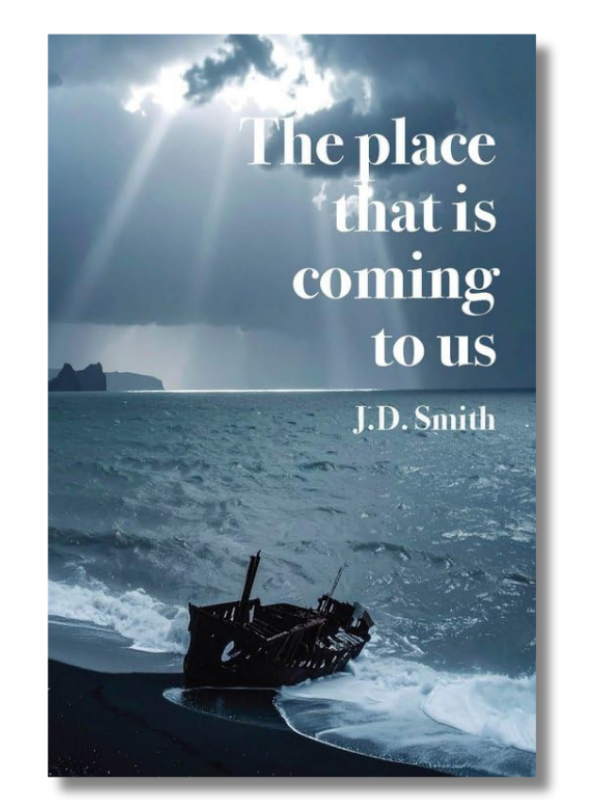
A formidable collection of elegies about environmental change and the loss of habitat
The Place That Is Coming To Us, the latest collection of poems by accomplished poet J.D Smith, deals with what can be meaningfully said about the future of the environment and all its creatures, so many of whose kind will not be around for that much longer. These are gentle poems with immense sensitivity, but they deliver some real gut punches to those who feel deeply about wildlife and environmental issues.
The poems in this collection are run through with great wistfulness which, despite being expected given the theme, manages to strike the reader again and again. The remnants of jellyfish “thicken the waters of which they are almost wholly made,” waters which due to climate change can be called “a once bounded simplicity” which now “girds the shores.”
In “At Finzel Swamp,” Smith gives us a moving miniature about the extinction of the salamander, that “soft monster” which children will find hard to believe existed. Elsewhere, the tiger too is projected forward in time to when it will be relegated to legend, in a poem which turns a sharp final corner in masterly fashion.
J. D. Smith demonstrates a keen instinct for the satisfying ending. The reader is convinced of this as they read poem after poem closing with knot after perfect knot, bringing each whole together. Whether a talent or a strived-for worked-out result, it shows an active and deliberate poet, even a thinker. Read on, for example, as a short poem about hunger persisting through generations ends with a poignant play on an ancient poetic idea:
“One can imagine at last
a toy tribe or figurine-sized race
who live in hollow logs
and hide under fallen leaves
as if it were they
who would be measured
against a needle’s eye.”
A couple of the more successful poems in this collection find their form in the imaginative listing of different definitions of a thing, the comma, for instance, which only slows words “like currents flowing around a stone.” And “Definitions of the Chesapeake,” one of the longest pieces in the book, stands out as a shining example of Smith’s glorious art of the striking ending.
Another standout is the speaker’s paean to mushrooms, where a rich image joins with a captivating phrase. Juxtaposed to that, in “No Ideas But In Things” we see the poet’s ability to work with grand narrative, just in the space of two short stanzas.
If it is not sacrilege to say so, this collection is in places reminiscent of Marianne Moore. It is certainly the presence of wide bestiaries that produce this resemblance, but also the seriousness with which both Moore and J. D. Smith treat them. Where the great American poetess, however, employs a detached intelligence, Smith is loving and truly concerned for the creatures that people his poems.
It is rare and wonderful to come across poetry that is so sincere in feeling yet lacks no technique, and it is all the more wonderful that the feeling comes from a place of concern for the real treasures of our world. Perhaps providing a happier goodbye than any poem could, the author bio at the end of the volume informs us that Mr. Smith lives with rescue animals at home.








What did you think?