

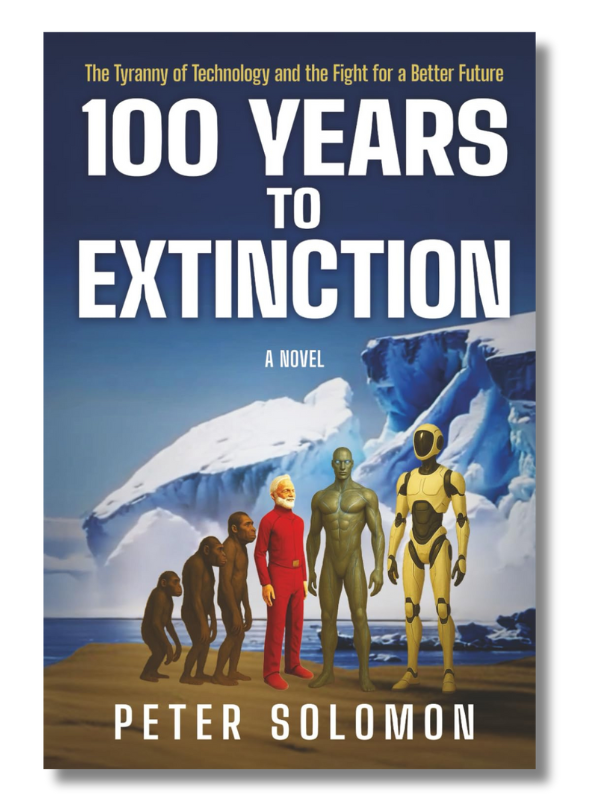
An impressive novel with the threat, urgency, and potential of the world our next generation will inherit
Science fiction doesn’t just explore out-there concepts like robot apocalypses and alien invasions. They also provide a window into the questions that keep humanity up at night and, if readers are lucky, offer some solutions to them while they’re at it.
100 Years to Extinction tells the story of a family determined to protect the future with urgency, a real sense of danger, and a welcome dose of heart.
The book begins in 2022, when the Arvad family is startled awake with terrible news: the eldest Arvad child, Liz, has been shot, and her prognosis is anything but certain. While she ultimately pulls through, Liz, her sister Aster, and her cousin Milo are shaken into realizing a truth that’s tough for every young person to face: the world is dangerous, and a long, healthy life isn’t promised.
Since they share a scientific streak, the near-tragedy also reminds them of Stephen Hawking’s iconic prediction—that humanity has 100 years to colonize another world or die out—and spurs them to promise each other that they will each do one thing with their lives to save humanity. Over a decade, each of the rising Arvads battle personal demons, navigate the treachery of politics, look to the stars, and peer into the microscope in a collective effort to save the world (and the future). It’s thrilling to behold.
Part of what Makes 100 Years to Extinction so successful is that it avoids common sci-fi pitfalls—namely, the focus on the large concepts being tackled instead of the emotional core and connection to the central characters. The book connects readers to Liz, for example, by immediately delving into the fear and sense of unfairness that seem only natural to survive a shooting: “Feeling sorry for myself, I stare at my reflection in the bathroom mirror and think, Why did this happen to me?” This also extends to larger and more complex feelings that Aster has later on. When grappling with the personal sacrifices she has to make in the name of larger, existentially vital achievements, she ponders, “I’m crying again, thinking of leaving all this forever for a cold, barren desert 100 million miles away.”
100 Years to Extinction is also a success because it doesn’t shy away from using the future to take a sharp, critical look at the inequities the world faces right now. It’s not only emotional, it’s political, and it throws the intellectual punches some might feel leaders and representatives should be throwing in real life. More than a few times, readers will find a character saying, “I hate to tell you, but theres’s a surprisingly large number of people who will believe anything” and “He’s trashing everything we’ve worked so hard to create.” Those are good sentiments for readers to know about going in, in case they’re a turnoff, but readers looking for those bitter pills in their literature will be rewarded with inspiration too. It’s both refreshing and exciting to hear someone say, “My Gen Z will be the first generation to venture into the vastness of space to establish a new human outpost.”
For those reasons and more, I can’t recommend 100 Years to Extinction enough. Readers who pick it up won’t want to put it down, but once they do, they might find themselves eager for every Peter Solomon book—and human achievement—the future holds.




What did you think?