

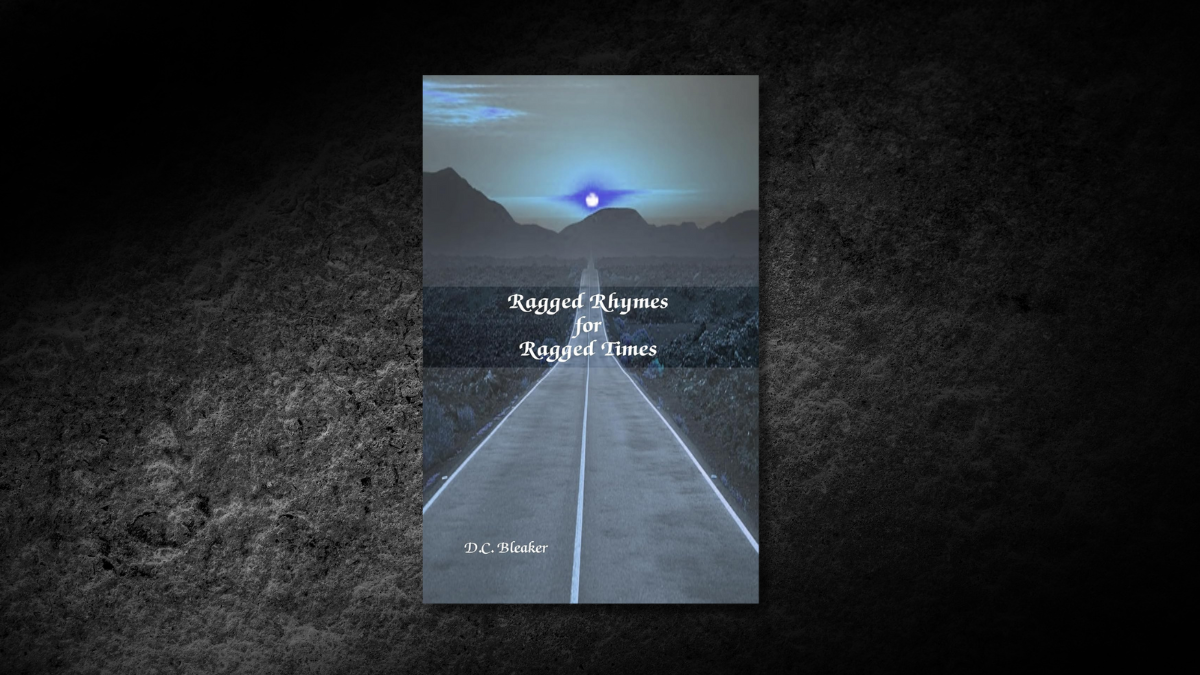

Ragged Rhymes for Ragged Times
by D.C. Bleaker
Genre: Poetry
Print Length: 91 pages
Reviewed by Susan Morris
A deeply original collection about those experiences we will never forget—full of insight and ironic comedy
In “On a Trip to Albuquerque,” the large opening poem in this collection, Bleaker takes readers on a candid journey on an overcrowded bus ride. It complains and pokes fun at all sorts of people: from unruly children to tattooed people to peopled cursing and making out in public. The length fits the theme, making readers feel they have joined the uncomfortable journey even though it has already happened—the past tense creating a necessary distance for the reader. Then, the poet concludes this anti-lyrical ode with an empathetic verse:
“Though I and mine were now released
from the agonizing ride
I couldn’t help but feel the grief
of those still left inside”
Ragged Rhymes… contains ballads with consistent verses and end rhymes, including “Ballad of a Hickup Truck,” “Skid Row Song,” “Murderous Memory Lane,” and “Amurkia.” It touches on a number of themes, including “Brave New Year 2023” and “Brave New Year Redux” about New Year’s resolutions.
It speaks to mortality and morality, including broad themes encompassing but not limited to exploitation, heroism, love, grief, poverty, addiction, saints, devils, and real people, like Keith Emerson in “On The Death Of Keith Emerson.” Bleaker even includes a tribute to Scottish poet Edwin Muir in “Sparring with Edwin,” where the original poem’s lines are interspersed with alternating lines and create a new and engaging “rhyme within a rhyme.”
Using sometimes irregular rhyme schemes, conscious linguistic choices, occasional form, and vivid imagery, Bleaker rarely dips into a proper rhythm, and it seems this, too, is on purpose. These are ragged rhymes for ragged times, fitting the title, and they’re comedic poems about life, underpinned by more enlightened themes and ideas, leaving a reader to laugh and contemplate in equal parts.
“Crackpot Jones” captures a tragic respect for a man who was raised with nothing, who came to exploit others and eventually succumbed to a series of sins. The author’s use of mixed narrative voice makes this poem seem twisted, causing the speaker to become unclear but which effectively creates a need for the reader to stop and think about the clearly purposeful intent.
“Heaven in the Trailer Court” is an upbeat, lighthearted, humorous rhyming verse with a potent underlying theme and includes some of the best lines of the collection. It seems that the poem compares mobile homes to ships in a storm headed toward heaven, but the metaphors are mixed, starting with a stormy sky, then on to frosted glass, fountains, and spiders, and finally returning to sailing with the last verse. This, like many in the book, is a complicated scheme that pays off.
“The whole damned place it reeks of heaven
grab your rusty harp and wail
why not be a dead ‘un here
through frayed eternity we sail”
These artful poems read like short stories with personality—each one offering a view of life through the eyes of someone who sees everything with a bit of irreverence.
Thank you for reading Susan Morris’s book review of Ragged Rhymes for Ragged Times by D.C. Bleaker! If you liked what you read, please spend some more time with us at the links below.




What did you think?