

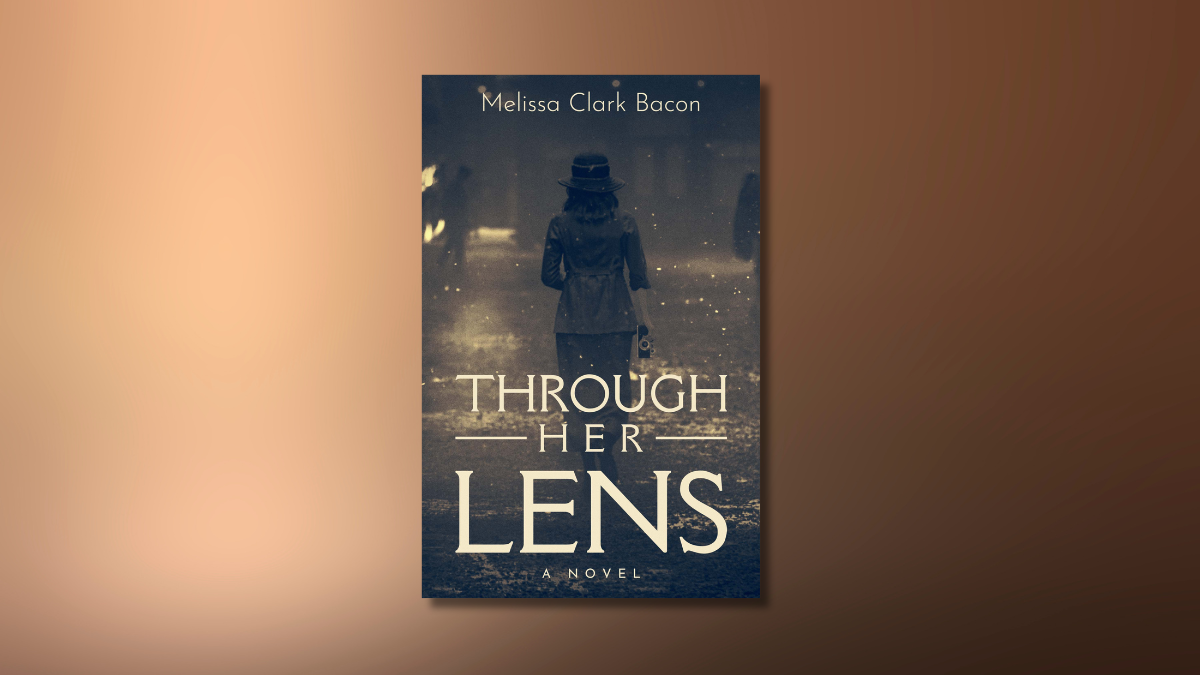
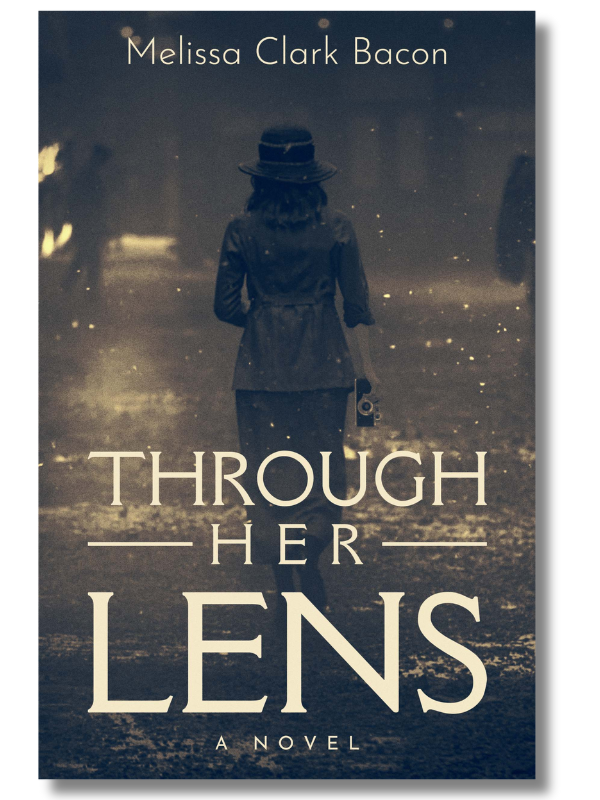
Through Her Lens
by Melissa Clark Bacon
Genre: Historical Fiction / Women’s
ISBN: 9798891321182
Print Length: 312 pages
Publisher: Atmosphere Press
Reviewed by Elena Bellaart
A feminist photographer must find her own path through national and familial obligations in this thought-provoking historical novel.
Millicent Trayford—Mille to those who know her—loves taking pictures above all else. When World War II breaks out and English daily life is shattered, she is determined to photograph the contributions of women to the war effort, ensuring that their work is not forgotten by history.
But when her dear friend and childhood nanny Clara is lost in a German bombing, her father—a high-level military operative—convinces her that her talents are urgently needed elsewhere. Millie becomes a photographic interpreter, analyzing images of German-occupied territory to identify sites of Nazi weapons development. As D-Day draws closer, and the threat of catastrophic violence seems to rise with each passing day, Millie’s bonds with her family and her faith in her own beliefs will be tested.
Like her professional life, Millie’s love life is dominated by her desire to meet her family’s expectations. Despite her infatuation with charming Scottish pilot Callum, she is engaged to a man named Elliot, whose good breeding meets her grandmother’s approval but whose values are patently misaligned with her own. Millie’s people-pleasing tendencies don’t quite account for this inexplicably bad relationship. Millie herself admits feeling no attraction toward Elliot, reflecting, “It didn’t seem fair that they could be so well suited but have no spark between them. Being with him wasn’t nearly as exciting as simply looking into Callum’s eyes.” It’s never quite clear, though, in what other ways they might be “well suited,” as Elliot has few redeeming qualities. He is possessive and demanding and expects Millie to give up photography for good in order to fulfill her duties as a wife and mother; he relishes her anxiety-induced weight loss, gleefully counting her visible ribs; he is unfaithful to her at any opportunity. Callum, on the other hand, is kind, supportive, and doting, making Millie’s romantic indecisiveness difficult to understand at times.
Millie’s passion for wartime photography raises interesting questions about the ethics of documentation during times of crisis. In the aftermath of multiple bombings, we see Millie dashing through burning streets, snapping photographs of dead bodies and personal grief—even ignoring the specific wishes of her subjects sometimes. Indeed, the scenes of disaster, while terrifying, also prove to be a thrill for Millie. The images are clearly impactful; published in newspapers and circulated by the government, they help the world understand the intimate nature of war’s destruction.
But in her dedication to her craft, Millie often pauses to photograph women and children suffering before attempting to come to their aid. And her impulse to photograph the scenes of war makes private sorrow public, as when she snaps a picture of a grieving soldier: “It may have been an unforgivable intrusion, but she had to capture his pain, preserve it as a reminder.” The novel prompts contemporary readers, used to seeing archival photographs of war as distant black-and-white artifacts, to think more deeply about the ethical choices that had to be made in order for us to have access to similar images. The complexities of these moral dilemmas are fascinating, though Millie’s dedication to getting the best picture possible at all costs does occasionally prevent the reader from taking the side of her devoted friends.
Still, Through Her Lens will be an enjoyable read for those interested in the lesser-known sides of World War II history.
Thank you for reading Elena Bellaart’s book review of Through Her Lens by Melissa Clark Bacon! If you liked what you read, please spend some more time with us at the links below.




What did you think?