

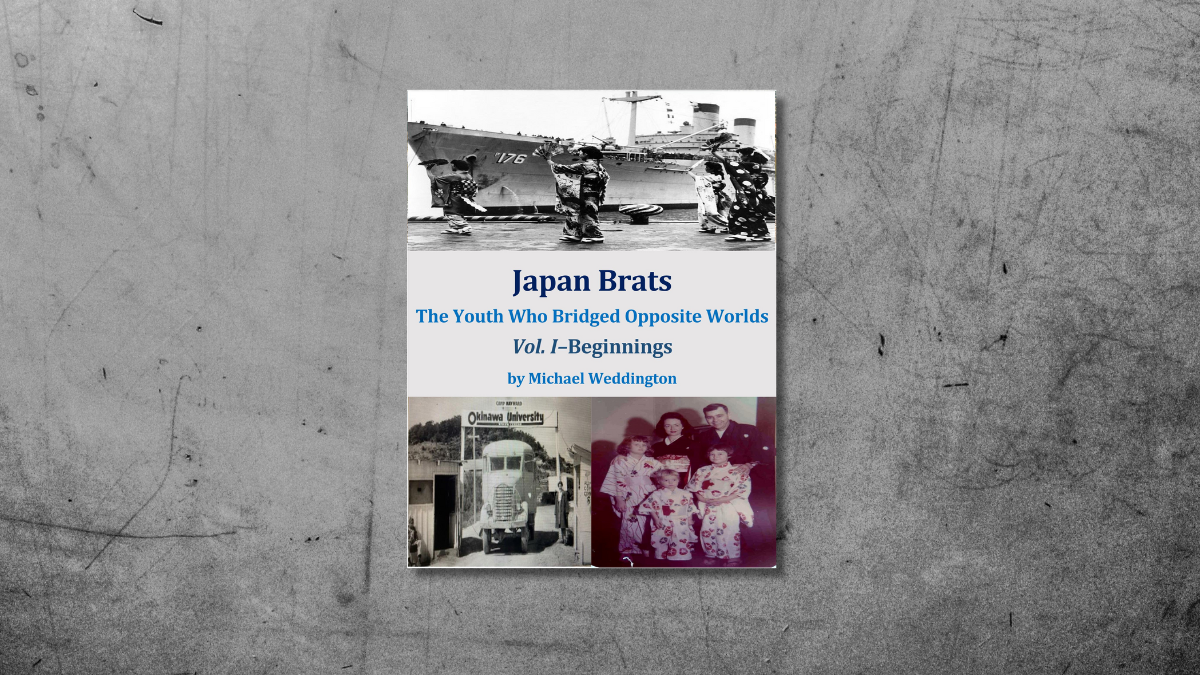
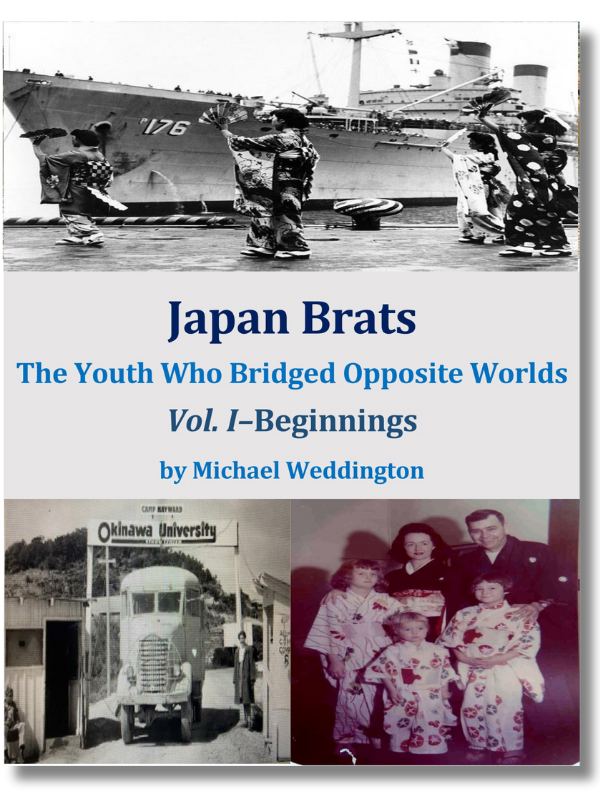
Japan Brats
by Michael Weddington
Genre: History / Military
Print Length: 495 pages
Reviewed by Peggy Kurkowski
A former military brat captures the diverse experiences of overseas dependents in postwar Japan in this collaborative memorial to a shared past.
“It was one of the greatest social science experiments in modern times.” In 1946, waves of United States military personnel and their families were sent to live in the defeated nations of Germany and Japan. And thanks to Michael Weddington, the vanishing world of his and other overseas dependents’ military youth in Japan and Okinawa are now forever inscribed in his singular Japan Brats: The Youth Who Bridged Opposite Worlds, Volume I – Beginnings.
In the spring of 2019, Weddington reconnected with his childhood “tribe” from his youth in Japan, which energized him to undertake this massive historical project. In Volume I of Japan Brats, he takes readers on a deeply researched and engaging tour of Japanese and Okinawan history, religion, philosophy, culture, school histories, family formation stories—even including his own fictional short story on how his American father and Japanese mother met—and much more.
Weddington is a charming guide who encourages readers to take their time and savor this large volume; indeed, he suggests the multifaceted offerings should be read in any order the reader desires, which makes Japan Brats a handy reference for those searching for specific information.
While the book is dedicated to his fellow “U.S. military-affiliated youth who grew up for a time in Japan” [1] and speaks mostly to them, it also appeals to other readers thanks to Weddington’s crisp historical overviews. Of immense interest are the cultural comparisons of Japanese and American societies, including the Okinawan differences with mainland Japan itself. The dynamic challenges of two diametrically different cultures coming together after such a painful history come alive in the dozens of touching stories, meticulously catalogued by the author.
For former military brats, Weddington’s research and diligent curation of mountains of written and photographic material is sure to spark nostalgia. This book is a treasure trove of photographs from WWII-era to present day, including both historical photos of Japanese and American political and military leaders, but more importantly for this book, page after page of personal photos of military base housing, Okinawan neighborhoods and markets, class photos, team sports, and favorite hangouts to name a few. Weddington provides a priceless visual yearbook of memories for those who still carry them in their heart.
A laudable element of Japan Brats is Weddington’s self-described commitment to fostering understanding, especially in terms of “making meaning from contrasting influences.” His section on bridging the cross-cultural gap—not only with the Japanese, but among dependents from all over the U.S. representing different racial, religious, and socioeconomic groups—is a helpful primer for military families anticipating an overseas deployment in Japan or Okinawa (although the main principles of “education, engagement, and practice” are applicable to any foreign culture). Visual aids, charts, and graphs abound as are Weddington’s book recommendations (book covers included) for further reading threaded throughout.
The most moving portions are the detailed, diverse, and touching portraits of family formations in Japan and Okinawa—including the author’s own. With American military men stationed on Okinawa and parts of the mainland, it was inevitable that love would blossom between men and the local women. Weddington includes an illuminating selection of dependents’ stories of their interracial parents and their bi-racial experiences living in Japan and America. The author imagines his own parents’ meeting and marriage toward the conclusion of Volume I with a fictional short story that reads like a romance, which aims to honor the cross-cultural marriages that have endured across time. Underscoring his theme of what draws people together rather than apart, he calls out these marriages for “their love, courage, and sacrifices [that] have forged connections between many nations and people.”
Japan Brats: The Youth Who Bridged Opposite Worlds is a fascinating snapshot in sepia of a time and place of cultural overlap, as told by those who lived and loved it. You don’t need to be a “brat” to appreciate these universal stories of human connection.
Thank you for reading Peggy Kurkowski’s book review of Japan Brats by Michael Weddington! If you liked what you read, please spend some more time with us at the links below.




What did you think?