

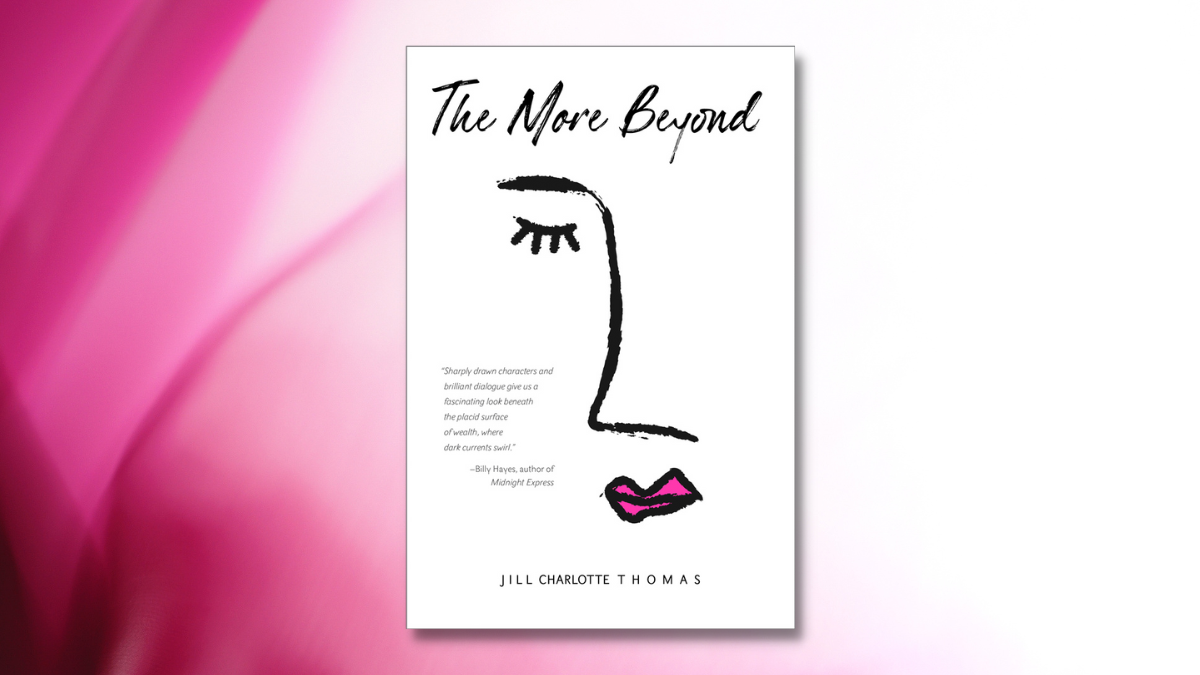

The More Beyond
by Jill Charlotte Thomas
Genre: Literary Fiction
ISBN: 9798218259273
Print Length: 208 pages
Reviewed by Audrey Davis
A poignant yet glaring study of a girl learning to become
Morton Guthrie is a child of a wealthy family who is disenchanted with society. After attempting suicide on two separate occasions, she checks herself into a psychiatric facility. With no close friends to speak to, her parents always too busy for her with their more-important matters, and her extended family callous and artificial, Morton feels she is very quickly drowning in her own existence and the niceties around her with no support system. Against her therapist’s better advice, she decides to leave treatment to visit her family at their request on their vacation in New York City, but now Morton must find it within herself to become her own support system.
“Too much thinking can drive you insane.”
Jill Charlotte Thomas’s The More Beyond presents readers with a driven story and a fractured-yet-coherent structure, similar to that of Sylvia Plath’s The Bell Jar. The narrative is directed by Morton, being told from her point of view through both flashbacks and current events; yet, in the presence of her family, her actions are mostly reactions, being pulled into whatever direction (or department store) her family desires.
Morton is very aware of the lavish, consumer nature of her family’s lifestyle, but she is also aware that she succumbs to it—at one point going so far as to have her driver turn around after they’ve already reached their destination so she can purchase a $4,000 designer handbag she’d seen, solely to impress and outshine her cousin. Her mother occasionally quips that they are not “made of money,” but Morton wants for nothing and at times is conceited and materialistic, not really having been shown another way to behave. Even at her lowest, Morton is still passing unfair judgement on those around her, still picturing herself as slightly above them somehow, particularly her peers in the psychiatric facility.
“The difference between a limo driver and a taxi driver is that a taxi driver can tell you to get out of his cab, whereas a limo driver must put up with you till the journey ends, you run out of money, or one of you dies.”
Mental illness is a difficult subject to approach, mainly because it manifests differently in every individual. Morton is introspective and often finds herself dwelling on her circumstances, but she has a difficult time expressing herself to others. Her therapist routinely asks thought-provoking questions, triggering a complex inner monologue that answers the question fully but freezes her physically. When Morton eventually does speak, she offers little more than terse, guarded replies.
Because the story is character-driven, the reader is not given much of a plot to hold on to, outside of the hope that Morton will be able to see herself through her own struggles. I would have liked to know more about some of the characters in Morton’s life as well, such as her best friend who was only mentioned once, or her mother, but again this novel is told by Morton, about Morton, so the reader isn’t afforded the narrative curiosity for what she isn’t interested in remembering.
“I felt like a goldfish in a bowl with people staring at me, and there wasn’t even a toy castle or some seaweed to hide behind, or another goldfish to talk to.”
As the novel does a nice job of showing her thought process of trying to help herself, it also bares her cynicism, her occasional dark humor, and her desire to occasionally fade into the background. Some of the characters’ behaviors and reactions seem exaggerated or perhaps unnecessarily cruel at times, prompting readers to wonder whether this is how they truly treat her or how Morton views them, creating another source of contention for herself.
Readers will appreciate the dramatic imagery of New York City and southern California while following Morton and her endeavor to re-discover herself, her family, and the world as she sees it.
“My style is classic and small and thin, not big and round and hard, but I’m so happy to be with them in their world, their company, I don’t need any gifts. I’m just glad I came.”
Thank you for reading Audrey Davis’s book review of The More Beyond by Jill Charlotte Thomas! If you liked what you read, please spend some more time with us at the links below.




What did you think?