

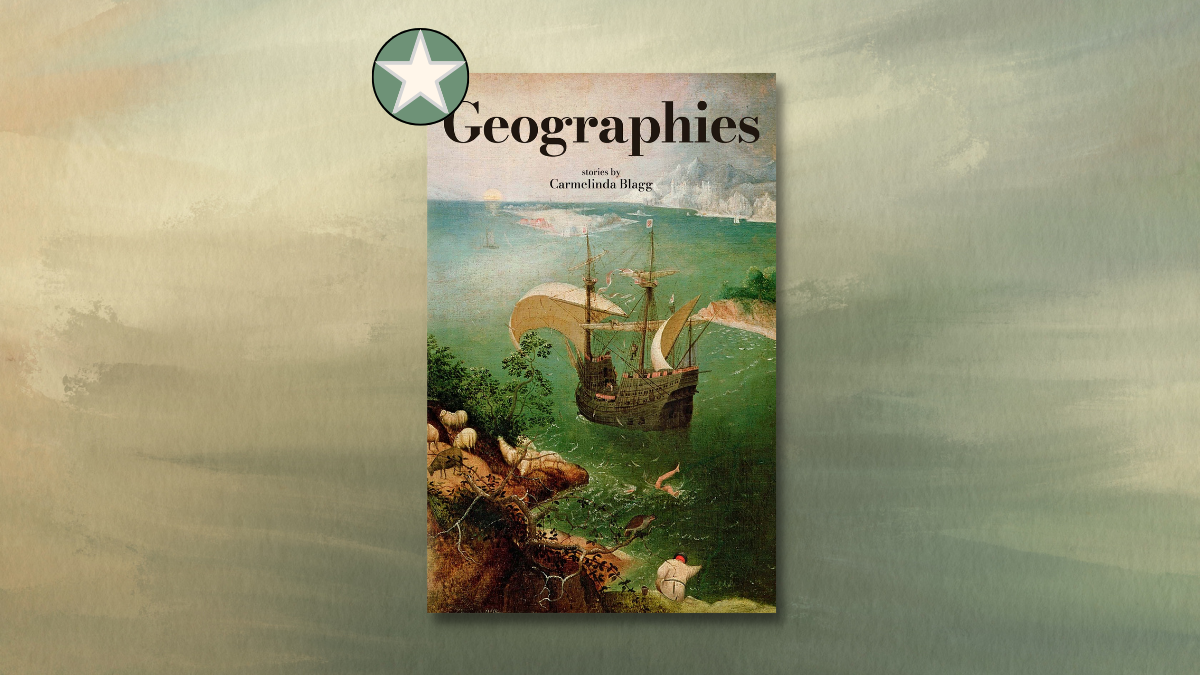

Geographies
by Carmelinda Blagg
Genre: Literary Fiction / Short Stories
ISBN: 9798891320253
Print Length: 212 pages
Publisher: Atmosphere Press
Reviewed by Lauren Hayataka
Through fleeting encounters and lasting impressions, these stories capture the essence of places as ephemeral homes, where the heart finds refuge in unexpected corners.
Carmelinda Blagg’s short story collection, Geographies, explores the enduring impact of places and our feelings and relationships with the people within them. Tucked away in our hearts are the memories of everywhere that we have been before and may never truly escape from, regardless of whether they represent a blissful sanctuary or a place crumbling with regret.
From the shores of Dover, England where adolescent desires are rekindled to the vast West Texas plains where orphaned siblings confront danger, Blagg invites readers to explore the depths of her characters’ hearts and souls along with everything buried within them.
Blagg has an exceptional ability to create characters that are more than words on a page; they truly leap from the pages as if they are living, breathing souls made from flesh and blood. Each and every character is searching for the place inside them that they recognize as home. This search, intertwined with grief and nostalgia, forms a poignant undercurrent, echoing the constant in their lives—change, inevitable and heart-wrenching. This theme of change, depicted through various lenses—a fall leading to assisted living, the transformation of a childhood monster into a frail old man—emerges from every story, wrapped in grief; an emotion that Blagg expresses in ways that others never have.
Blagg has an incredible talent for describing things not easily spoken of and captures sentiment so successfully that her words will resonate. Her talent at doing so is unfounded, one that other authors may strive for but never fully achieve.
In one standout story, “The Things She Said,” Blagg paints an incredible picture of grief and intimacy that makes you want to look away, for the sheer bittersweetness it brings. It is the story of Conner Pratt, who cared for his separated wife, Libby, who was riddled with cancer. The defining moment in the story captures the quiet yet profound heart of the book, as the pair lay side-by-side in a cramped hospital bed, and Libby invites Conner into the place inside her heart that he never knew: “This is not a hospital bed. It’s a meadow. Smell the air? Hear those birds? And I love you.”
Even in solitary moments, such as in “The White Cliffs Hotel,” when the elderly Mr. Brightman revisits the hotel after five decades, change and the sense of grief that accompanies it are palpable. His observation, “There was almost no one left from his younger days. The present world was more like a dream to him than what had once been real in his life,” echoes through every room, every cliff. In his solitude, he encounters the ghosts of his past, reliving moments that blur the line between dream and reality, and make you feel nostalgic for moments that may have never occurred—and may never occur—within your lifetime.
Within the pages of Geographies, one may also sense an undercurrent of compassion that weaves its way through every chapter, embracing the grief that each story carries. Amidst the harshness of human nature, Blagg reveals the innate longing for understanding that resides within us all. Through the character of Eva in “Slipstream,” a painful dichotomy emerges from her divorced parents’ enduring love and her mother’s profound sense of isolation that drove a wedge between them. Relocating from New York to Vienna, Eva observed her mother’s relentless pursuit, “…in search of places she knew she wouldn’t find, as if she needed to convince herself they were no longer there. Her favorite café, the shuhladen she’d known since her early school days. Yes, still gone. ‘Scar tissue,’ she would say whenever she found traces of something that hadn’t been completely erased.”
This same compassion echoes throughout the last story, “Presence,” where Mrs. Humphries, in the twilight of her life, acquires a programmed emanated assistant. Manifesting as a series of colors, the assistant allows her to maintain her dignity and to remain within the home she has always known and never wishes to leave. Her house is more than where she resides, it is a witness to the past, as Mrs. Humphries explains: ‘…It’s a house where, in the early years of our marriage, my husband brought me home after two miscarriages; the house where we argued and mended one another; the house where he died. I can still feel the drift and eddying of our lives here in the floorboards where I walk.’
The bond that forms between them transforms them into Chloe and Paul, instead of Mrs. Humphries and an emulated system without a name. Their relationship overflows with a sense of need and compassion and feels as beautiful and real as any relationship between humans. It is a quiet yet devastating story that captures the essence of Blagg’s themes; the need for someone to understand us when we cannot understand ourselves. Only the need for understanding will bury into your skin and refuse to let you go, until you realize what has grown inside of you.
Reading Geographies is more than a literary experience; it is an introspective journey, one that invites you to look to the hidden places within your heart. This collection of stories doesn’t just evoke ache and wonder; it is unrelenting in its bold—almost brutal—sentiment and intentions. Yet, every probing question Blagg asks finds its answer within her narrative, steadfast in its unwavering pursuit to explore the uncharted territories within her characters. What lingers is the unexplored place within you, tethered to your heart and your lungs, patiently waiting to be acknowledged and understood.
Thank you for reading Lauren Hayataka’s book review of Geographies by Carmelinda Blagg! If you liked what you read, please spend some more time with us at the links below.



What did you think?